The Hindu Analysis Feb 22nd & 23rd



The Hindu News Analysis – 22nd & 23rd February, 2026
1. What are the key takeaways from AI summit? (GS-3)
2. Why has eastern Nagaland got autonomy? (GS-2)
3. Parliament’s historic law, an extended wait for women(GS-2)
4. India studying implications of U.S. tariff moves (GS-2)
5. Indigenous tetanus and adult diphtheria vaccine launched; Nadda calls it momentous (GS-3)
6. New Kashmir wheat varieties to solve crop cycle issue (GS-3)
7. How proteins are being tweaked to be quantum sensors inside the body (GS-3)
8. Prime Minister launches full Delhi-Meerut RRTS corridor(GS-3)
9. A new CPI base, a clearer inflation signal (GS-3).
What are the key takeaways from AI summit?GS Paper III:
Science and Technology – AI and emerging technologies
Context·
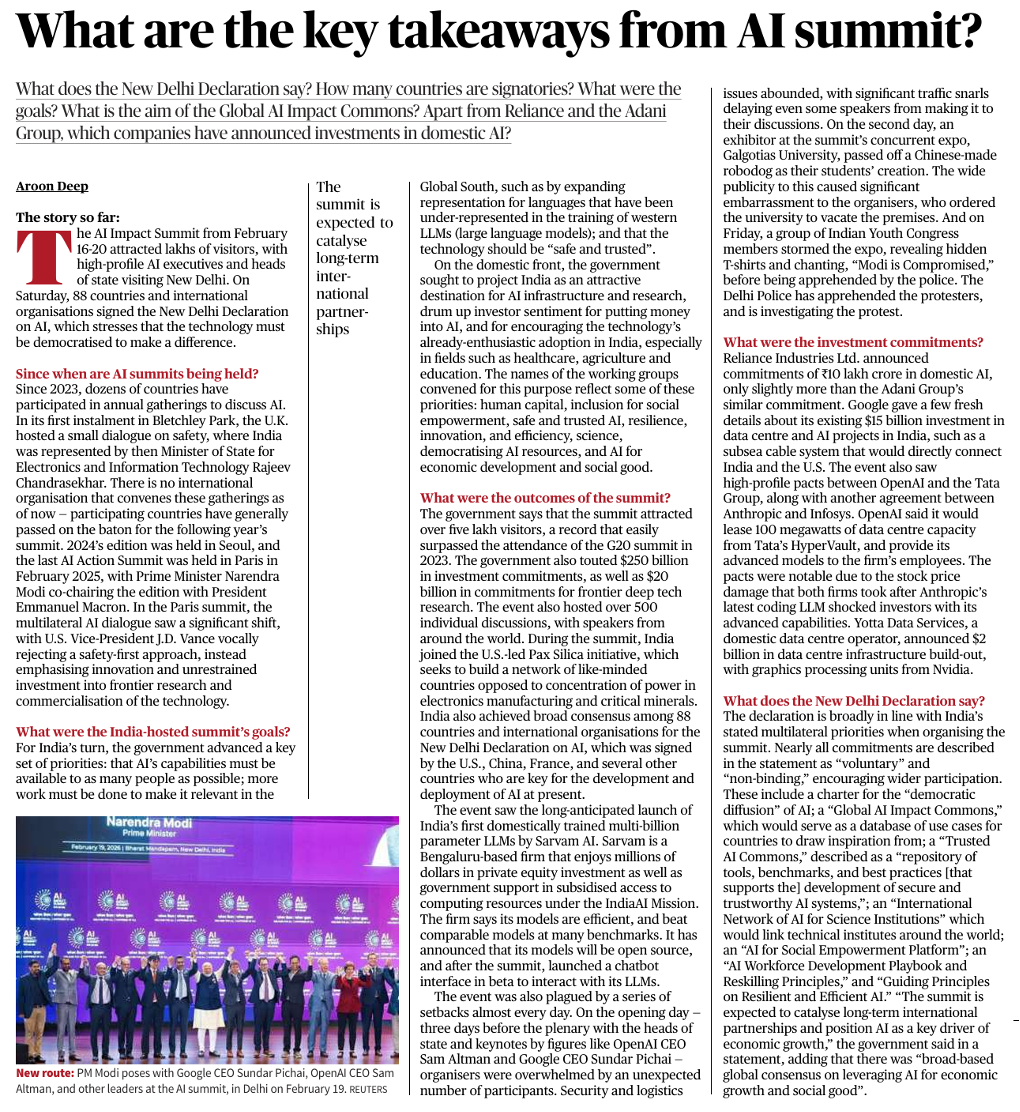
The AI Impact Summit (Feb 16–20, New Delhi) brought together representatives from 88 countries and international organisations, culminating in the New Delhi Declaration on AI. The summit aimed to promote democratisation, safety, and inclusive development of Artificial Intelligence while positioning India as a global AI hub.
Detailed Analysis:
Significance of the AI Summit and New Delhi Declaration
1. Significance for Global AI Governance
- Moves beyond a purely “AI safety” approach (seen in Bletchley and Paris) towards a balanced framework of safety + innovation + inclusion.
- Establishes voluntary multilateral norms in the absence of a binding global AI treaty.
- Promotes shared tools such as Trusted AI Commons and Global AI Impact Commons, helping standardise responsible AI practices.
2. Significance for the Global South- Emphasis on representation of under-represented languages in AI models.
- Focus on democratising access to AI tools rather than concentration in a few Western tech giants.
- Enhances voice of developing countries in shaping AI norms.
3. Significance for India’s Strategic Positioning- Positions India as a bridge between developed and developing countries in AI governance.
- Strengthens India’s role in global technology diplomacy.
- Enhances India’s image as a responsible innovation leader.
4. Significance for India’s Economic and Technological Ecosystem- Massive investment commitments (Reliance, Adani, Google, OpenAI partnerships).
- Boost to data centre infrastructure and compute capacity.
- Launch of India’s first domestically trained multilingual LLM (Sarvam AI).
- Potential to generate employment in AI research, semiconductor, cloud computing and digital services.
5. Significance for Social Development- AI for healthcare, agriculture, education and governance.
- AI Workforce Development Playbook to address skill transformation.
- AI for Social Empowerment Platform focusing on inclusive growth.
Challenges Before Global AI Governance Post-Summit1. Challenges of Non-Binding Commitments- The New Delhi Declaration is “voluntary” and “non-binding”.
- Lack of enforcement mechanism may weaken compliance.
- Risk of symbolic commitments without concrete action.
2. Geopolitical and Strategic Rivalries- U.S.–China technological competition may fragment AI governance.
- Risk of AI blocs forming around competing standards.
- Export controls on chips and AI hardware may restrict cooperation.
3. Challenges for India’s AI Infrastructure Ambitions- High energy demands of data centres.
- Dependence on imported GPUs and semiconductor supply chains.
- Need for reliable power, cooling and digital infrastructure.
4. Ethical and Regulatory Challenges- Algorithmic bias and discrimination.
- Data privacy concerns and cybersecurity risks.
- Balancing innovation with regulation without stifling startups.
5. Socio-Economic Challenges- Job displacement due to automation.
- Skill gap in AI-ready workforce.
- Risk of widening digital divide between urban–rural and rich–poor populations.
Way Forward- Develop a robust, flexible domestic AI regulatory framework aligned with global best practices.
- Strengthen semiconductor manufacturing and indigenous chip ecosystem.
- Promote green AI infrastructure to reduce energy footprint.
- Invest heavily in AI skilling and reskilling initiatives.
- Institutionalise Global South collaboration platforms for equitable AI governance.
Conclusion·
The AI Summit in New Delhi marks a critical shift in global AI discourse—from narrow safety concerns to inclusive, innovation-led, and development-oriented AI governance.· While the summit strengthens India’s global technology leadership, translating commitments into measurable outcomes will determine its long-term success.
UPSC Mains Question:
Q. Discuss the role of emerging technologies like Artificial Intelligence in reshaping global governance structures. How does the New Delhi AI Summit reflect India’s evolving role in multilateral technology diplomacy? (250 words)
Source: The Hindu
Why has eastern Nagaland got autonomy?GS Paper II:
• Issues related to federal structure
• Governance and administration
• Special provisions for States (Article 371A)
 Context
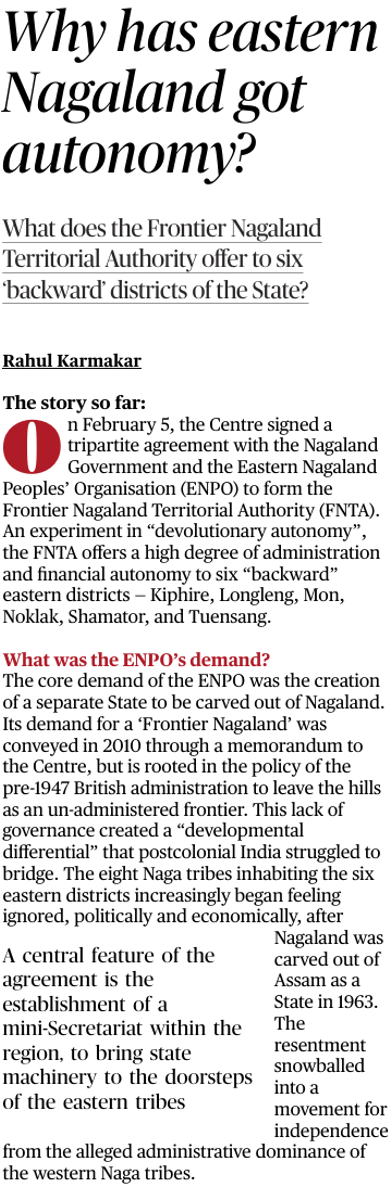
· In February, the Centre signed a tripartite agreement with the Nagaland Government and the Eastern Nagaland Peoples’ Organisation (ENPO) to create the Frontier Nagaland Territorial Authority (FNTA).· The FNTA grants administrative and financial autonomy to six eastern districts — Kiphire, Longleng, Mon, Noklak, Shamator and Tuensang — under a model of “devolutionary autonomy.” Detailed Analysis:What does the FNTA offer to the six districts?
- Establishment of a mini-Secretariat headed by a senior officer.
- Greater administrative decentralisation.
- Financial autonomy with proportional fund allocation.
- Legislative and executive powers over specific subjects (land use, agriculture, rural development, infrastructure).
- No alteration of Article 371A, thereby preserving Naga customary laws and identity.
Significance of Granting Autonomy to Eastern Nagaland1. Significance for Federal Governance- Demonstrates asymmetrical federalism in action.
- Offers a middle path between full statehood and status quo.
- Strengthens cooperative federalism through negotiated settlement.
2. Significance for Regional Equity- Addresses long-standing grievances of underdevelopment and neglect.
- Brings administration closer to remote tribal regions.
- Reduces administrative dominance of western Nagaland districts.
3. Significance for Internal Security- Eastern Nagaland borders Myanmar and is strategically sensitive.
- Acts as a pacifier in a region vulnerable to insurgency.
- Prevents alienation that could fuel separatist tendencies.
4. Significance for Political Stability- Avoids fragmentation of Nagaland through state bifurcation.
- Demonstrates Centre’s flexibility in conflict resolution.
- Reinforces democratic engagement over armed mobilization.
Challenges Before the FNTA Model1. Challenges of Implementation- Effective fund allocation and administrative clarity needed.
- Risk of bureaucratic overlap between State government and FNTA.
- Ensuring capacity building in local governance institutions.
2. Political Challenges- Possible resentment from other regions within Nagaland.
- Risk of similar demands from other districts or communities.
- Managing inter-tribal dynamics carefully.
3. Security and Border Challenges- Proximity to Myanmar and presence of insurgent groups.
- Cross-border ethnic linkages complicate governance.
4. Precedent Challenge- The model may encourage similar demands in Manipur (Kuki-Zo issue).
- However, differences in context (active conflict, ethnic tensions) limit direct replication.
Way Forward- Ensure transparent financial devolution and monitoring.
- Strengthen grassroots institutions and tribal councils.
- Integrate development with security measures.
- Promote inclusive dialogue to prevent further fragmentation demands.
ConclusionEastern Nagaland’s autonomy through the FNTA represents a calibrated approach to managing regional aspirations within India’s federal framework. It balances development, identity preservation, and national security, showcasing constitutional flexibility without redrawing state boundaries.
UPSC Mains Question
Q. The creation of the Frontier Nagaland Territorial Authority reflects India’s model of asymmetrical federalism. Discuss its significance and challenges in the context of regional autonomy demands and internal security. (250 words)
Source: The Hindu
Parliament’s historic law, an extended wait for womenGS Paper II:
- Parliament and State Legislatures – Structure, Functioning & Issues
- Constitutional Amendments
- Representation of Women
 Context·
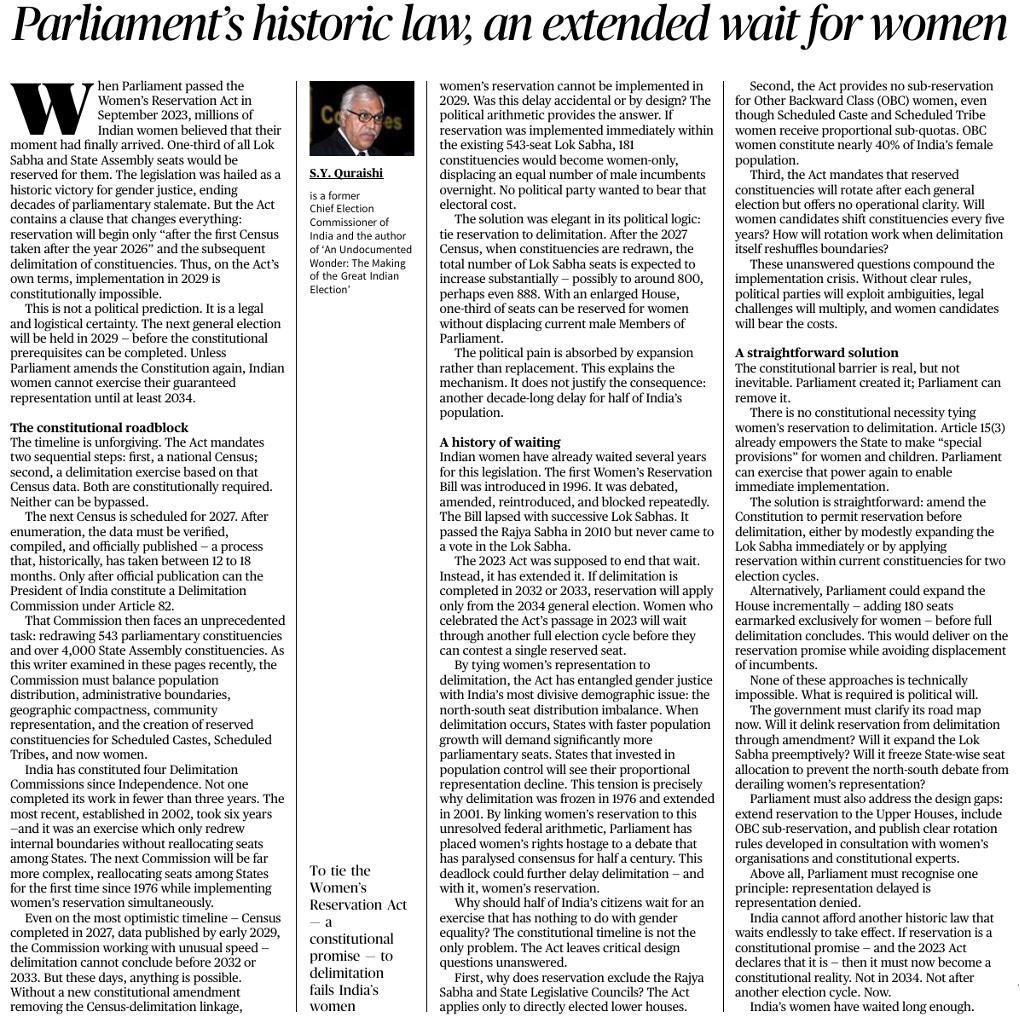
Parliament passed the Women’s Reservation Act, 2023, providing 33% reservation for women in the Lok Sabha and State Legislative Assemblies. The Act links its implementation to the first Census conducted after 2026 and the subsequent delimitation exercise.· While the legislation marks a major step toward enhancing women’s political participation, its operationalization depends on completion of constitutional procedures.
Detailed Analysis
Historical Background
- The idea of women’s reservation in legislatures dates back to the 1990s.
- The first Women’s Reservation Bill was introduced in 1996.
- It was passed by the Rajya Sabha in 2010 but lapsed.
- The 2023 Act represents the culmination of decades of debate and political consensus-building.
Thus, the legislation reflects a long-evolving reform process in India’s democratic framework.
Significance of the Act
1. Strengthening Democratic RepresentationWomen constitute nearly half of India’s population but remain underrepresented in legislatures. The Act aims to correct this structural imbalance.
2. Constitutional Commitment to Gender JusticeThe Act aligns with the constitutional vision of equality and builds upon Article 15(3), which allows special provisions for women.
3. Potential Policy ImpactGreater women’s participation can:
- Improve focus on social sector issues
- Enhance inclusive governance
- Encourage grassroots political participation
4. Institutional ContinuityReservation already exists for women in Panchayati Raj Institutions. Extending it to higher legislatures ensures vertical consistency.
Challenges in Implementation
1. Linkage with Census and Delimitation
The Act mandates:
- Conduct of a national Census
- Delimitation based on updated population data
These are constitutionally required processes that require administrative preparation and time.
2. Delimitation Complexity
The Delimitation Commission must:
- Redraw parliamentary and assembly constituencies
- Ensure population balance
- Protect SC/ST reservations
- Maintain administrative coherence
Given the scale, this exercise may take several years.
3. Rotation of Reserved Constituencies
The Act provides for rotation of reserved seats after each delimitation cycle. Clear operational guidelines will be necessary to ensure smooth implementation.
4. Representation Design Questions
The Act includes SC/ST sub-reservation but does not provide separate OBC sub-reservation. Broader political discussions may continue on this aspect.
Way Forward
1. Timely Completion of Census and Delimitation
Efficient execution of constitutional processes will facilitate implementation.
2. Operational Clarity
Clear guidelines on rotation and seat allocation will enhance transparency.
3. Inclusive Consultation
Engagement with political parties, constitutional experts, and women’s groups can strengthen implementation.
4. Institutional Preparedness
Capacity building, leadership training, and political mentoring can maximize the benefits of increased representation.
Conclusion
The Women’s Reservation Act, 2023, is a landmark reform in India’s democratic journey. While its implementation is linked to constitutional procedures such as Census and delimitation, the Act establishes a firm legal framework for enhancing women’s representation.With coordinated administrative effort and political cooperation, the legislation has the potential to significantly strengthen inclusive governance in the coming years.
UPSC Mains Question
“The Women’s Reservation Act, 2023 marks a significant step towards gender-inclusive democracy, but its implementation is contingent upon constitutional processes such as Census and delimitation.” Discuss the constitutional basis, significance, and implementation challenges of the Act. (250 Words)
India studying implications of U.S. tariff movesGS Paper II:
• India–U.S. relations
• Effect of policies of developed countries on India’s interests
Context·
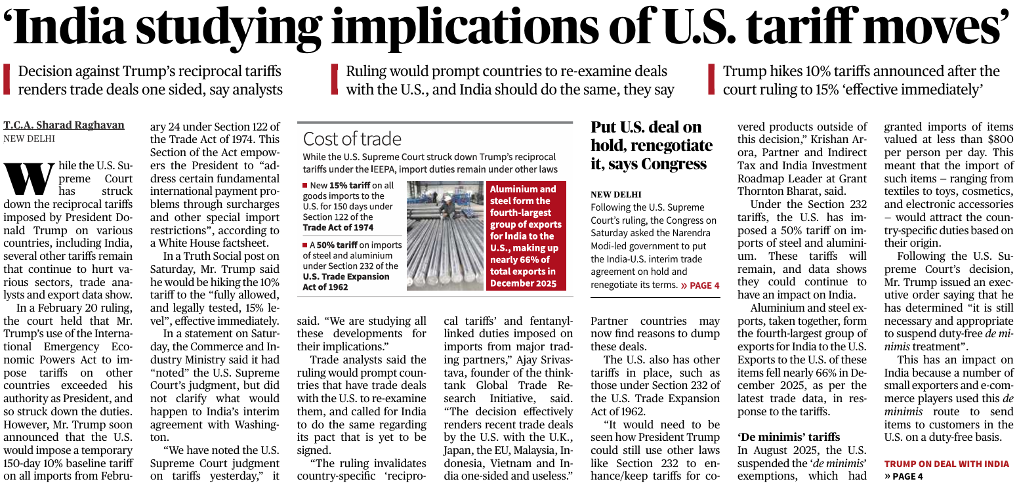
The U.S. Supreme Court struck down former President Donald Trump’s “reciprocal tariffs” imposed under the International Emergency Economic Powers Act (IEEPA), holding that the President exceeded his authority.· However, other tariffs remain in place under alternative legal provisions such as:· Section 122 of the Trade Act, 1974 (temporary tariffs)· Section 232 of the U.S. Trade Expansion Act, 1962 (national security tariffs on steel & aluminium)Following the ruling, Trump announced a 15% tariff (effective immediately), replacing the earlier 10% baseline tariff.India is studying the implications for its exports and interim trade agreement with the U.S.Significance of U.S. Tariff Moves for India1. Significance for India–U.S. Trade Relations
- Creates uncertainty over India’s interim trade agreement.
- May require renegotiation of tariff concessions.
2. Significance for India’s Exports- Steel and aluminium exports face higher duties.
- Reduces price competitiveness in the U.S. market.
3. Significance for MSMEs- Removal of ‘de minimis’ exemption affects small exporters and e-commerce players.
4. Significance for Global Trade- Signals rising protectionism.
- Weakens predictability in the multilateral trade system.
Prelims ConceptsReciprocal Tariffs- Tariffs imposed in response to another country’s tariffs.
- Often used as a protectionist tool in trade disputes.
Section 122 – U.S. Trade Act, 1974- Allows temporary import surcharges (up to 15%) for balance of payments issues.
- Valid for limited duration (generally 150 days).
De Minimis Rule (U.S.)- Allows duty-free imports below a specified value threshold ($800 per person per day earlier).
- Important for e-commerce and small-value exports.
Trade Protectionism- Policy of restricting imports through tariffs, quotas, or regulations to protect domestic industries.
Tariff vs Quota- Tariff: Tax on imports.
- Quota: Quantitative limit on imports.
Most Favoured Nation (MFN) Principle (WTO)- Equal trade treatment to all WTO members.
- Exception: Free Trade Agreements and national security provisions.
UPSC Prelims MCQQ. Which of the following measures can be classified as Non-Tariff Barriers (NTBs)?1. Import quotas2. Sanitary and Phytosanitary (SPS) standards3. Customs duties4. Technical standards and certification requirements
Select the correct answer using the code below:
(a) 1, 2 and 4 only
(b) 2 and 3 only
(c) 1 and 3 only
(d) 1, 2, 3 and 4
Answer: (a)
Correct Answer: (a) 1, 2 and 4 only
- Import quotas (1) → Quantitative restriction, hence NTB.
- SPS standards (2) → Health/safety regulations, act as NTB.
- Customs duties (3) → Tax on imports (Tariff), not NTB.
- Technical standards (4) → Regulatory requirements, hence NTB.
Key Point: NTBs restrict trade
without imposing a tax.
Indigenous tetanus and adult diphtheria vaccine launched; Nadda calls it momentousGS Paper III:
• Science & Technology – Indigenisation of technology
• Biotechnology and vaccine development
Context·
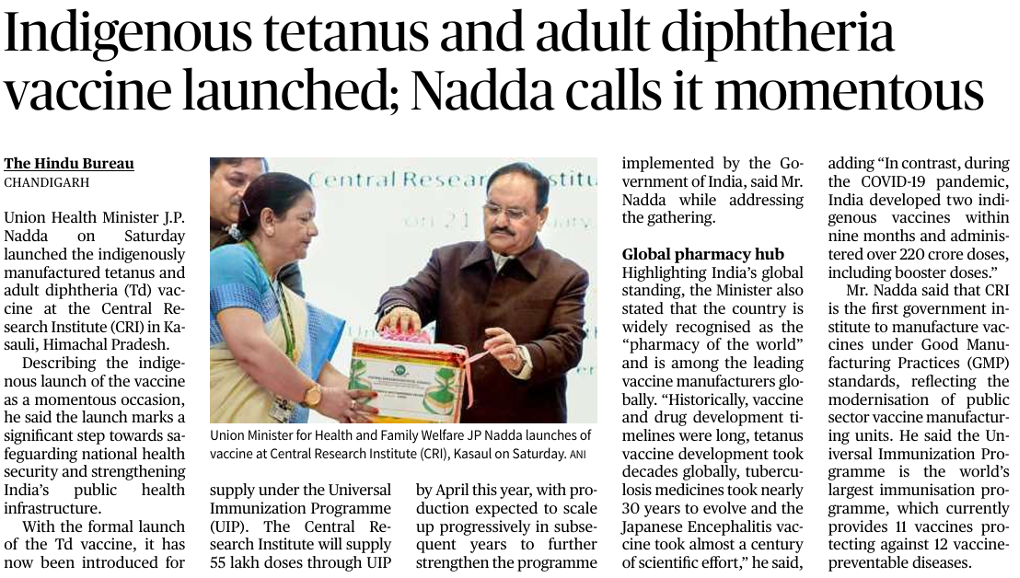
Union Health Minister J.P. Nadda launched the indigenously manufactured Tetanus and adult Diphtheria (Td) vaccine at the Central Research Institute (CRI), Kasauli (Himachal Pradesh).· The vaccine has been introduced under the Universal Immunization Programme (UIP) and will be supplied domestically.
Prelims Concepts:
Universal Immunization Programme (UIP)
- Launched in 1978 as Expanded Programme on Immunization (EPI).
- Rebranded as UIP in 1985 with expansion to rural areas.
- One of the largest public health programmes in the world.
Nodal Ministry- Ministry of Health & Family Welfare
Objectives of UIP- Rapidly increase immunization coverage.
- Improve service quality.
- Establish reliable cold chain system up to health facility level.
- Achieve self-sufficiency in vaccine production.
Diseases Covered Under UIP (12 VPDs)Nationwide (11 diseases):
1. Diphtheria
2. Pertussis (Whooping Cough)
3. Tetanus
4. Polio
5. Measles
6. Rubella
7. Severe Childhood Tuberculosis (BCG)
8. Hepatitis B
9. Rotavirus Diarrhea
10. Pneumococcal Pneumonia
11. Japanese Encephalitis (in endemic districts)
Link with Td Vaccine, Tetanus & Diphtheria
- Tetanus and Diphtheria are core diseases covered under UIP.
- The Td vaccine replaces earlier TT vaccine for booster doses.
- Td strengthens immunity among adolescents and adults, ensuring continued protection.
- Supports UIP objective of reducing morbidity and mortality.
- Cold chain requirement of Td aligns with UIP’s infrastructure strengthening goal.
About Tetanus- Caused by Clostridium tetani (toxigenic strains).
- Acute infectious disease affecting nervous system.
- Not spread person-to-person.
- High case fatality rate even with intensive care.
Symptoms- Painful muscle stiffness and spasms
- Lockjaw (inability to open mouth)
- Difficulty swallowing and breathing
- May lead to death
About Diphtheria- Caused by Corynebacterium diphtheriae.
- Highly contagious; spreads via respiratory droplets.
- South-East Asia accounts for significant global incidence.
Symptoms- Thick coating in throat
- Breathing difficulty
- Heart failure, paralysis
- Can be fatal
Td Vaccine – Composition & Nature- Protects against tetanus and diphtheria.
- Prepared using:
- Purified diphtheria toxoid
- Purified tetanus toxoid
- Antigens are adsorbed onto aluminium phosphate (adjuvant) to enhance immune response.
- Thiomersal used as preservative.
- Freeze and heat sensitive → Requires strict cold chain maintenance.
UPSC Prelims MCQ:Q. Which of the following diseases are covered under the Universal Immunization Programme (UIP)?1. Diphtheria2. Tetanus3. Hepatitis C4. Japanese Encephalitis
Select the correct answer using the code below:(a) 1 and 2 only
(b) 1, 2 and 4 only
(c) 1, 3 and 4 only
(d) 1, 2, 3 and 4
Answer: (b)
New Kashmir wheat varieties to solve crop cycle issue
GS Paper III:
• Agriculture – Cropping patterns in different regions
• Agricultural research and extension services
• Food security
• Science & Technology in agriculture
Context
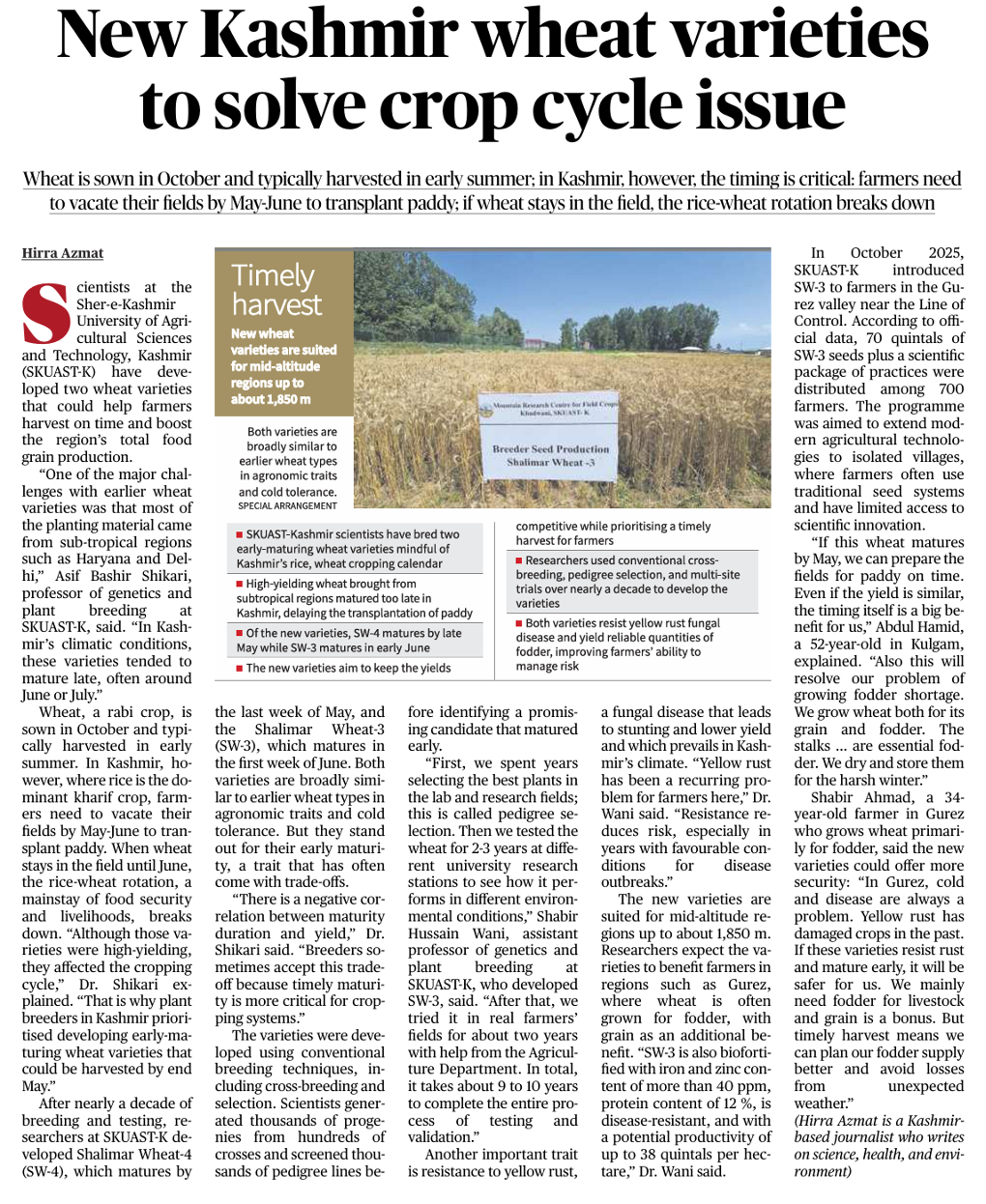
Scientists at Sher-e-Kashmir University of Agricultural Sciences and Technology (SKUAST-K) have developed two early-maturing wheat varieties — Shalimar Wheat-4 (SW-4) and Shalimar Wheat-3 (SW-3) — to address crop cycle disruption in Kashmir.In Kashmir, wheat is grown as a rabi crop, but due to climatic conditions, earlier varieties matured late (June–July), delaying paddy transplantation and disrupting the rice–wheat rotation system.Significance of the New Wheat Varieties
1. Significance for Cropping Pattern Stability
- Protects rice–wheat rotation.
- Prevents breakdown of double-cropping system.
2. Significance for Food Security- Sustains grain production.
- Supports regional self-sufficiency.
3. Significance for Fodder Security- Wheat straw used as fodder in harsh winters.
- Timely harvest ensures better planning and storage.
4. Significance for Climate Adaptation- Locally bred varieties tailored to regional conditions.
- Reduces dependency on sub-tropical seed varieties.
Prelims Concepts1. Rabi Crop- Sown in October–November.
- Harvested in March–June.
- Examples: Wheat, Barley, Mustard, Gram.
2. Rice–Wheat Cropping System- Sequential cultivation of rice (kharif) followed by wheat (rabi).
- Common in North India.
- Critical for food security.
- Requires timely harvest of wheat for paddy transplantation.
3. Early-Maturing Varieties- Crop varieties that complete lifecycle faster.
- Help in:
- Multiple cropping
- Avoiding climatic stress
- Maintaining crop rotation schedule
4. Yellow Rust (Stripe Rust)- Fungal disease of wheat.
- Caused by Puccinia striiformis.
- Thrives in cool and moist climates.
- Leads to yield loss and stunted growth.
5. Biofortification- Enhancing nutrient content (Iron, Zinc, Protein) through selective breeding.
- Different from fortification (which is post-harvest addition).
6. Mid-Altitude Agriculture- Refers to cultivation in regions up to ~1,850 m elevation.
- Requires climate-adapted varieties.
7. Pedigree Selection (Plant Breeding)- Conventional breeding method.
- Selection of superior plants over successive generations.
8. Cross-Breeding- Crossing two genetically different varieties to combine desirable traits.
UPSC Prelims MCQQ. With reference to Yellow Rust in wheat, consider the following statements:1. It is caused by a fungal pathogen.2. It thrives in cool and moist climatic conditions.3. It spreads primarily through contaminated irrigation water.
Which of the statements given above is/are correct?(a) 1 and 2 only
(b) 2 and 3 only
(c) 1 only
(d) 1, 2 and 3
Answer:
(a)Explanation:Correct Answer:
(a) 1 and 2 only
- Statement 1: Correct – Caused by fungus Puccinia striiformis.
- Statement 2: Correct – Thrives in cool and moist conditions.
- Statement 3: Incorrect – Spreads through wind-borne spores, not irrigation water.
How proteins are being tweaked to be quantum sensors inside the body GS Paper III:
- Science and Technology – Developments and their Applications
- Biotechnology and Genetic Engineering
- Nanotechnology
Context· Two recent studies published in
Nature demonstrate that fluorescent proteins can be genetically engineered to function as
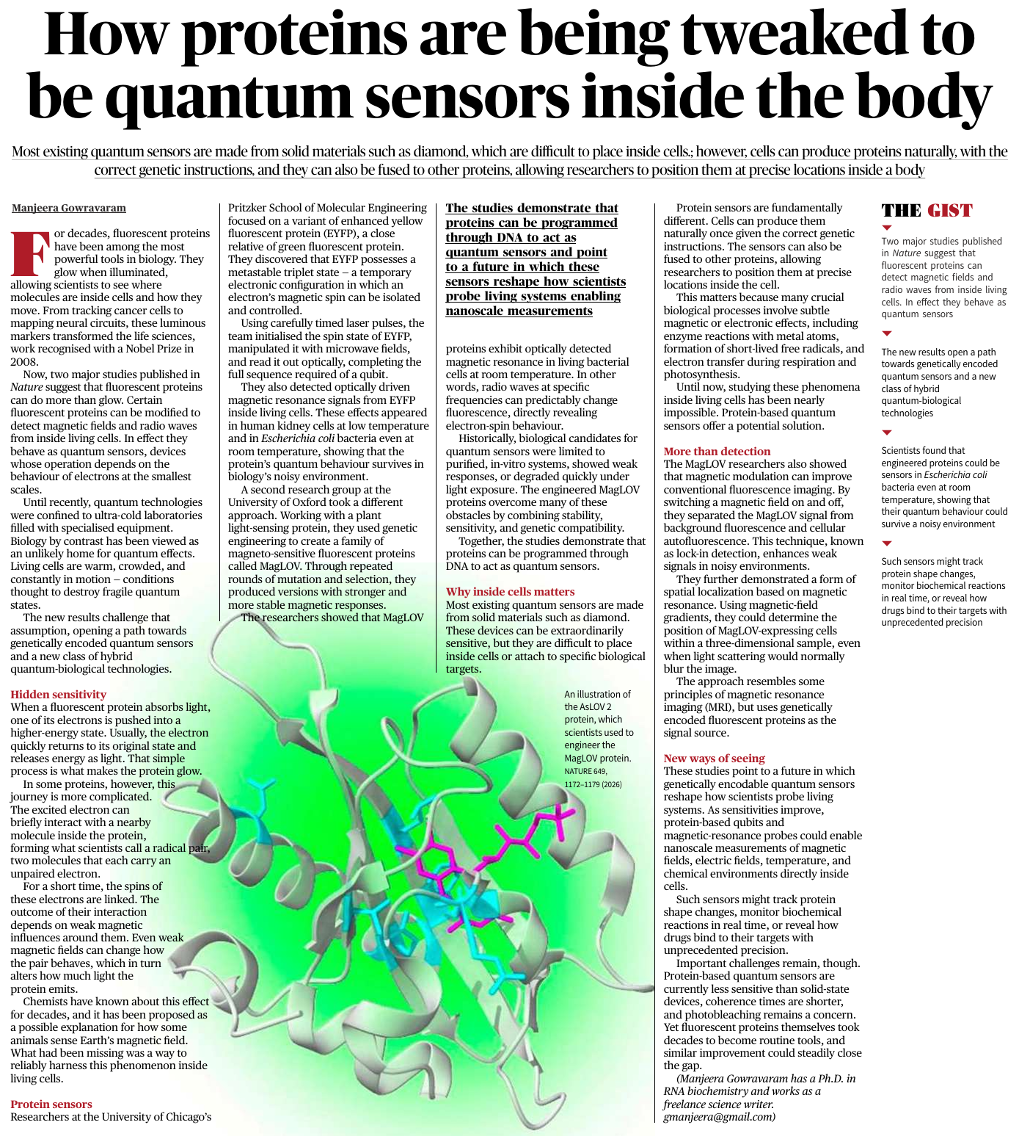
quantum sensors inside living cells. Unlike traditional quantum sensors made from solid materials such as diamond, these protein-based sensors can be produced by cells themselves and positioned at specific intracellular locations using genetic instructions.· This development opens pathways for hybrid quantum-biological technologies.
Quantum Sensing and BiologyQuantum sensors detect extremely subtle changes in physical parameters (magnetic fields, electric fields, temperature, etc.) by exploiting quantum properties of matter.Traditionally:
- Quantum sensors use solid materials (e.g., diamond-based nitrogen-vacancy centers).
- They require ultra-cold or controlled environments.
- Integration into living cells has been difficult.
Biological systems were long considered unsuitable for quantum applications because:
- Cells are warm, crowded, and noisy.
- Quantum states are fragile and easily disrupted.
The new research challenges this assumption.
Scientific Basis: Hidden Sensitivity in Fluorescent ProteinsFluorescent proteins:
- Absorb light and emit it at different wavelengths.
- Are widely used in biology to track molecules inside cells.
However, in certain proteins:
- Light absorption can create a radical pair (two molecules with unpaired electrons).
- The spin states of these electrons respond to weak magnetic fields.
- These magnetic influences alter fluorescence intensity.
This effect allows proteins to function as optically detectable magnetic sensors — even at room temperature.
Key Scientific Advances1. Engineering Enhanced Proteins (MagLOV)Researchers engineered light-sensitive proteins to create a family called
MagLOV:
- Through mutation and selection.
- Exhibiting stronger magnetic responses.
- Functioning inside bacterial and mammalian cells.
2. Detection in Living Cells- Magnetic resonance signals were detected inside Escherichia coli bacteria at room temperature.
- Effects were observed in human kidney cells at low temperatures.
- Demonstrates biological compatibility.
3. Localization CapabilityUnlike solid-state sensors:
- Protein sensors can be genetically encoded.
- They can be fused to other proteins.
- Positioned precisely inside cells.
This enables spatial mapping within three-dimensional biological samples.
UPSC Prelims MCQ
Q. With reference to genetically encoded sensors, consider the following statements:
1. Genetically encoded sensors are produced inside living cells using inserted DNA instructions.
2. Such sensors can be designed to function at specific locations within a cell. Which of the statements given above is/are correct?
A) 1 only
B) 2 only
C) Both 1 and 2
D) Neither 1 nor 2
Answer: C) Both 1 and 2Explanation:
- Statement 1 – Correct: Genetically encoded sensors are created when DNA coding for a sensor protein is introduced into a cell.
- Statement 2 – Correct: These proteins can be targeted to particular parts of a cell (e.g., nucleus, membrane), enabling localized sensing.
Prime Minister launches full Delhi-Meerut RRTS corridor GS Paper III:- Infrastructure – Transport (Railways, Urban Transport)
- Investment Models
Context·
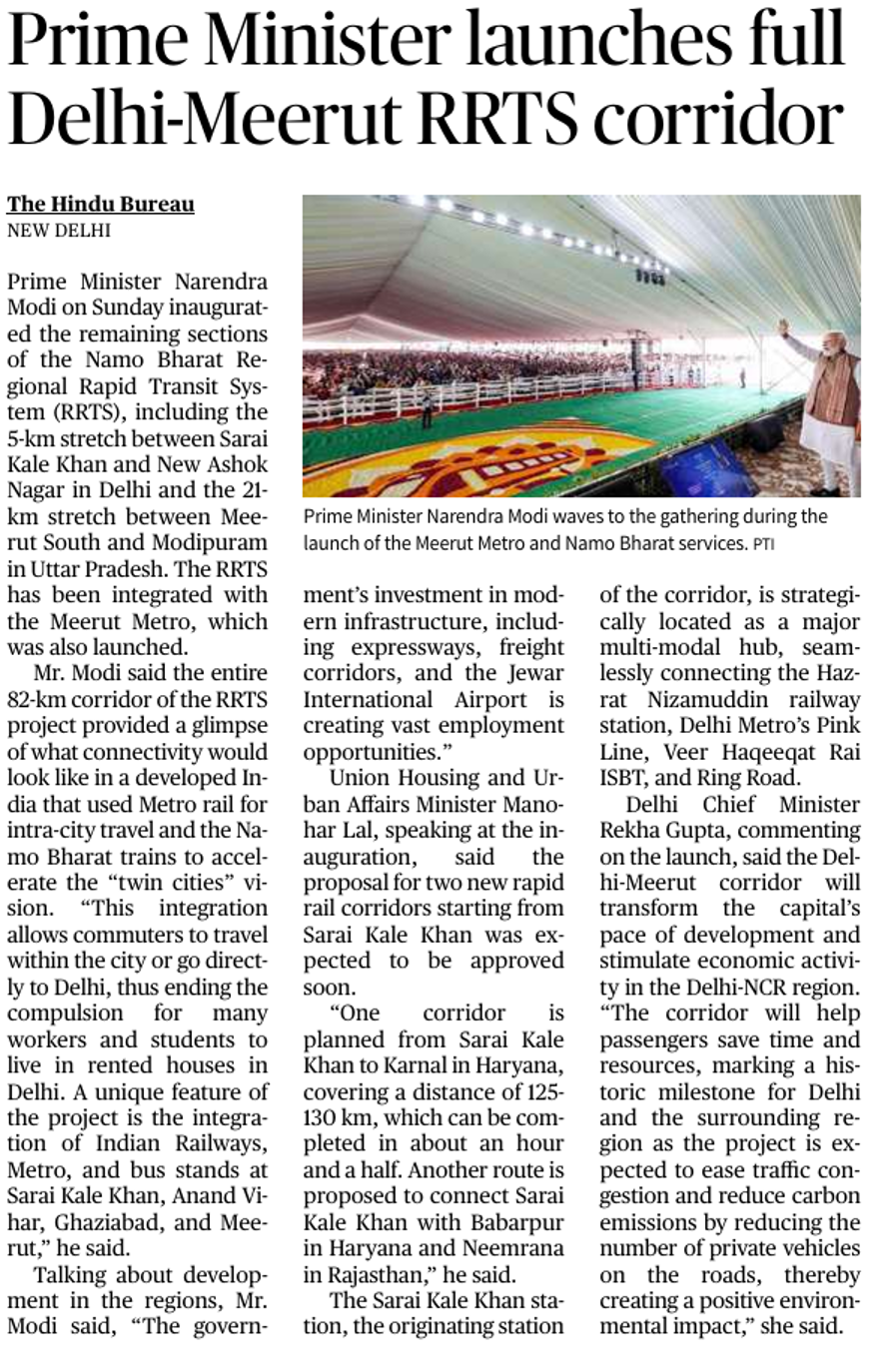
The Prime Minister inaugurated the remaining sections of the Delhi–Meerut Regional Rapid Transit System (RRTS) corridor, completing the 82-km stretch between Delhi and Meerut. The project integrates RRTS with the Meerut Metro and aims to improve regional mobility across the National Capital Region (NCR).Regional Rapid Transit System (RRTS)About RRTS
- Semi high-speed regional rail network with integrated mass transit features.
- Aims at balanced and sustainable urban development across NCR.
- Constructed by National Capital Region Transport Corporation (NCRTC).
- Joint venture of:
- Central Government
- Governments of Delhi, Haryana, Rajasthan & Uttar Pradesh
- Modelled on:
- RER (Paris)
- Regional-Express trains (Germany & Austria)
- SEPTA Regional Rail (USA)
- Operational speed: 160 km/h
- Design speed: Up to 180 km/h
Significance- Faster than Metro for long-distance intra-NCR travel.
- Higher frequency and better comfort compared to conventional Indian Railways for regional travel.
- Reduces travel time significantly.
- Promotes regional economic integration.
- Helps decongest Delhi and supports sustainable mobility.
Key Features of Delhi–Meerut Corridor- Total Length: 82 km
- Connects Delhi, Ghaziabad, and Meerut
- Integrated with:
- Delhi Metro (Pink Line)
- Hazrat Nizamuddin Railway Station
- ISBT and Ring Road connectivity
- Sarai Kale Khan acts as a major multimodal hub.
UPSC Prelims MCQQ. With reference to the Regional Rapid Transit System (RRTS), consider the following statements:
1. The RRTS is a semi high-speed rail network designed to improve regional connectivity in the National Capital Region (NCR).
2. The operational speed of RRTS trains is higher than that of conventional metro rail systems.Which of the statements given above is/are correct?
A) 1 only
B) 2 only
C) Both 1 and 2
D) Neither 1 nor 2
Answer: C) Both 1 and 2Explanation:
- Statement 1 – Correct: RRTS is a semi high-speed regional transit system aimed at enhancing connectivity across NCR.
- Statement 2 – Correct: RRTS trains operate at higher speeds (around 160 km/h) compared to metro rail systems.
A new CPI base, a clearer inflation signalGS Paper III:
- Indian Economy – Inflation
- Monetary Policy
Context·
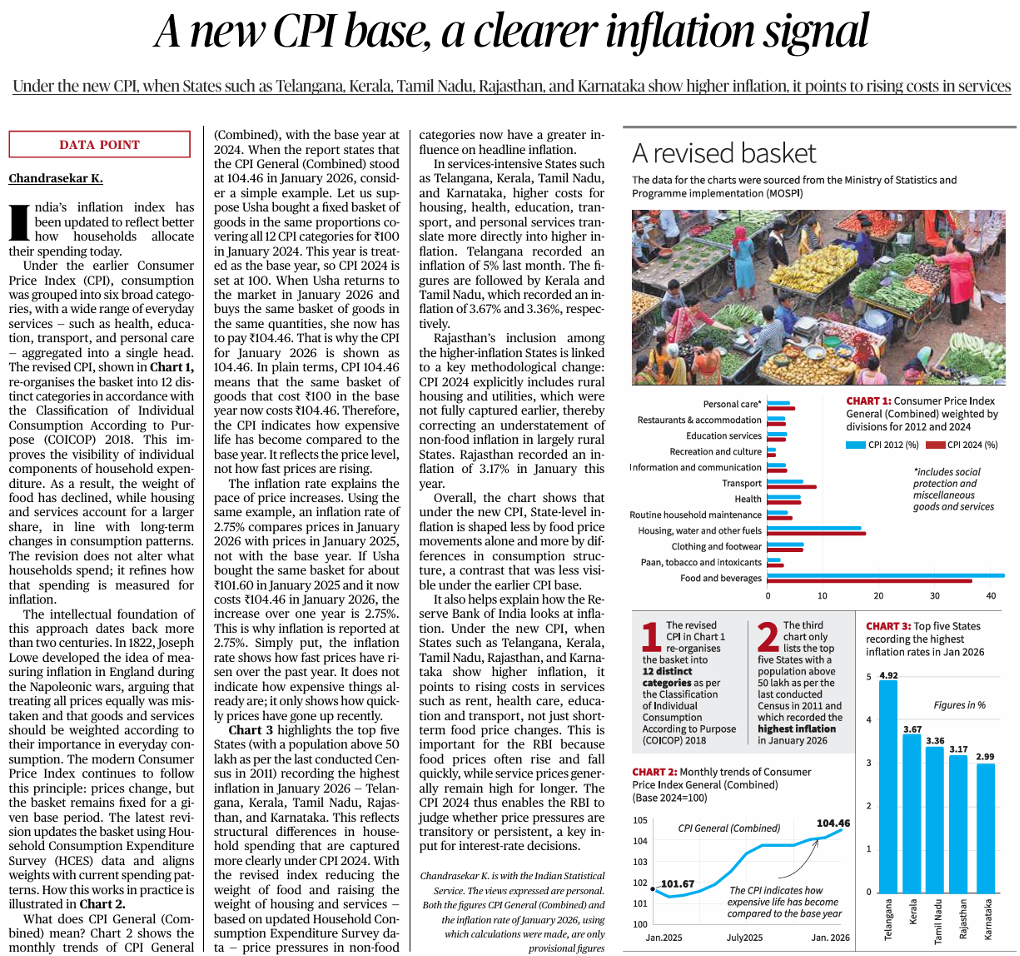
India’s Consumer Price Index (CPI) has been revised with a new base year of 2024. The revised CPI basket reorganises consumption into 12 categories (as per COICOP 2018 classification), updating weights based on recent Household Consumption Expenditure Survey (HCES) data.· The revision aims to better reflect present-day consumption patterns and provide a clearer signal on inflation trends.
Significance of the New CPI Base
- Reflects current consumption patterns (higher weight to housing & services, lower to food).
- Improves accuracy of inflation measurement.
- Captures service-driven inflation better, especially in urban and service-oriented States.
- Helps RBI distinguish between food inflation and core inflation.
- Provides clearer state-level inflation signals.
- Strengthens evidence-based monetary policy decisions.
Prelims Concepts:Consumer Price Index (CPI)- Measures change in retail prices of goods and services consumed by households.
- Indicates cost of living inflation.
- Used by RBI for inflation targeting.
Headline vs Core Inflation- Headline Inflation: Includes all items (including food & fuel).
- Core Inflation: Excludes volatile items like food and fuel.
Difference between WPI and CPI| Criteria | Wholesale Price Index (WPI) | Consumer Price Index (CPI) |
| Level | Measures inflation at wholesale level | Measures inflation at retail level |
| Who Calculates? | Office of Economic Advisor, Ministry of Commerce & Industry | National Statistical Office (NSO), MoSPI |
| Number of Items Covered | 697 | 299 |
| Major Categories & Weightage | Primary Articles (22.6%)
Manufactured Products (64.2%)
Fuel & Power (13.2%) | Food & Beverages (45.86%)
Pan, Tobacco & Intoxicants (2.38%)
Clothing & Footwear (6.53%)
Housing (10%)
Fuel & Light (6.84%)
Miscellaneous – Education, Health, Transport, Communication etc. (28.32%) |
| Weightage to Food | WPI-Food Index (~24%) | Consumer Food Price Index (CFPI) (~39%) |
| Impact of Rise in Food Prices | Lesser impact | Larger impact |
| Fuel & Power Weightage | Separate category (13.2%) | Around 8% (Fuel & Light + Transport fuel) |
| Highest Weightage | Manufactured Products | Food & Beverages |
| Services Included? | No | Yes |
| Indirect Taxes Included? | No | Yes |
| Targeted by RBI? | No | Yes (Target: 4% ± 2%) |
UPSC Prelims MCQQ. With reference to the Wholesale Price Index (WPI) and Consumer Price Index (CPI) in India, consider the following statements:
1. The Wholesale Price Index includes services in its calculation, whereas the Consumer Price Index does not.
2. The Reserve Bank of India uses CPI as the nominal anchor for inflation targeting.Which of the statements given above is/are correct?
A) 1 only
B) 2 only
C) Both 1 and 2
D) Neither 1 nor 2
Answer: B) 2 onlyExplanation:
- Statement 1 – Incorrect: WPI does not include services, whereas CPI includes services such as education, healthcare, and transport.
- Statement 2 – Correct: RBI targets CPI inflation at 4% with a tolerance band of ±2%.

 Launch your Graphy