The Hindu Analysis April 29th
The Hindu News Analysis – 29th April, 2026
1. Industrial output growth hits 5-month low of 4.1% (GS-3)
2. The fight to eliminate cervical cancer (GS-3, GS-2)
3. UAE announces exit from OPEC group weakening cartel’s bargaining power (GS-2, GS-3)
4. Rajnath Singh calls for unified SCO approach to eliminate terrorism
(GS-3, GS-2)
5. 44 illegal telecom centres ‘dismantled’ in two years, govt. tells Supreme Court (GS-3, GS-2)
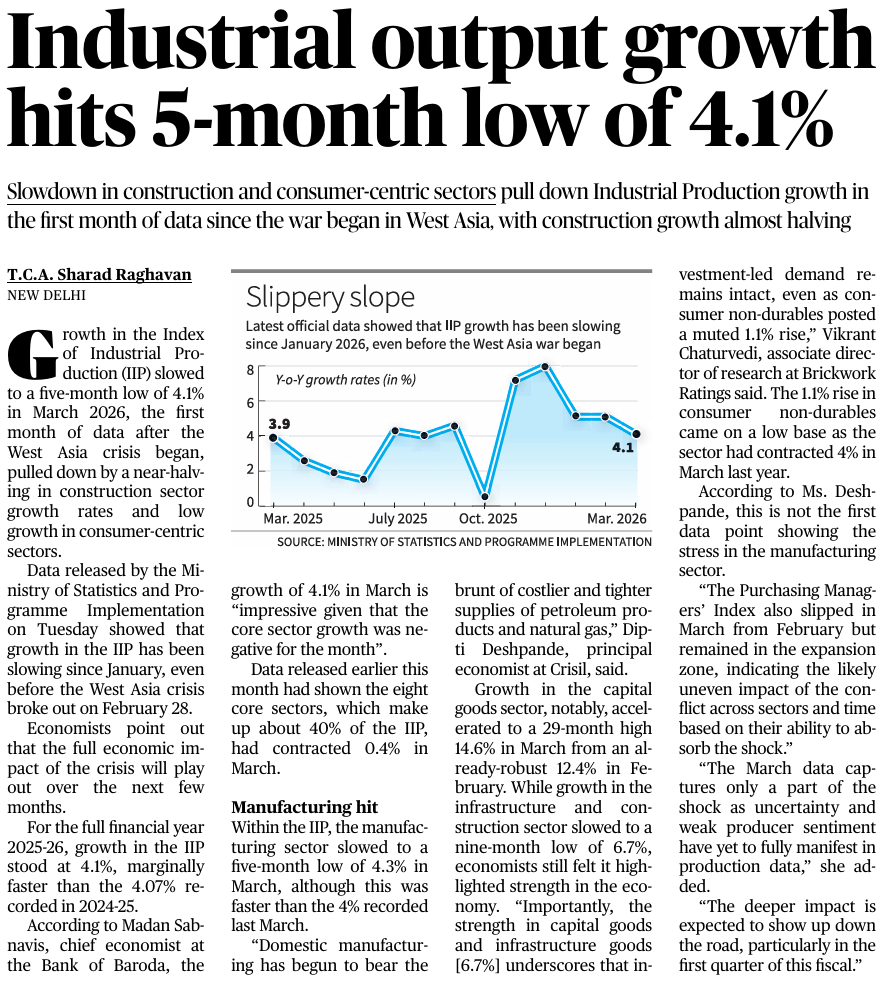
Industrial output growth hits 5-month low of 4.1%
GS Paper III:
Indian Economy & Growth
Industrial Policy & Infrastructure
Business Cycle & Economic Slowdown
Context
The slowdown is linked to:
Weak construction sector performance
Sluggish consumer-centric demand
Emerging global geopolitical shocks (West Asia conflict)
Prelims concepts
1. Index of Industrial Production (IIP)
The IIP is a composite indicator that measures the short-term changes in the volume of production of a basket of industrial products during a given period.
Released by: National Statistical Office (NSO), Ministry of Statistics and Programme Implementation (MoSPI).
Frequency: Compiled and released monthly.
Base Year: Currently 2011-12 (Note: In a 2026 context, always check if a new base year like 2017-18 has been fully adopted).
Purpose: It is used by government agencies (Ministry of Finance, RBI) for policy-making and is a key input for the quarterly and advance GDP estimates.
2. Sectoral Classification of IIP
The IIP measures growth across two broad classifications:
A. Broad Sectors
The index tracks three primary sectors with specific weightages:
Manufacturing (Highest weightage, approx. 77.6%)
Mining (Approx. 14.4%)
Electricity (Approx. 8.0%)
B. Use-Based Classification
The article mentions specific categories that fall under this classification:
Primary Goods: Basic raw materials.
Capital Goods: Plants, machinery, and equipment used in production (e.g., the 14.6% growth mentioned).
Intermediate Goods: Inputs for finished products.
Infrastructure/Construction Goods: Used for projects like roads/bridges (e.g., the 6.7% growth mentioned).
Consumer Durables: Long-lasting goods (TVs, cars).
Consumer Non-durables: Fast-moving goods (food, toiletries; mentioned as having 1.1% growth).
3. The Eight Core Industries
The article notes that core sector growth was negative ($-0.4\%$). These industries are considered the "backbone" of the economy.
Weightage: They comprise nearly 40.27% of the weight of items included in the IIP.
The Eight Industries (in descending order of weightage):
Refinery Products (Highest)
Electricity
Steel
Coal
Crude Oil
Natural Gas
Cement
Fertilizers (Lowest)
4. Purchasing Managers' Index (PMI)
The article mentions the PMI "slipped" but remained in the expansion zone.
Nature: An indicator of business activity in the manufacturing and services sectors. It is a survey-based measure (sent to private companies) rather than a production-based measure like IIP.
The Magic Number (50):
Above 50: Represents expansion compared to the previous month.
Below 50: Represents contraction.
At 50: Indicates no change.
UPSC MCQ
Q. Consider the following statements:
A rise in capital goods production is generally associated with an increase in investment activity in the economy.
Consumer non-durables are a reliable indicator of long-term industrial investment trends.
Which of the statements given above is/are correct?
A. 1 only
B. 2 only
C. Both 1 and 2
D. Neither 1 nor 2
Answer: A. 1 only
Explanation:
Statement 1 – Correct:
Capital goods (like machinery) reflect investment demand, so higher production indicates increased investment.
Statement 2 – Incorrect:
Consumer non-durables reflect short-term consumption demand, not long-term investment trends.
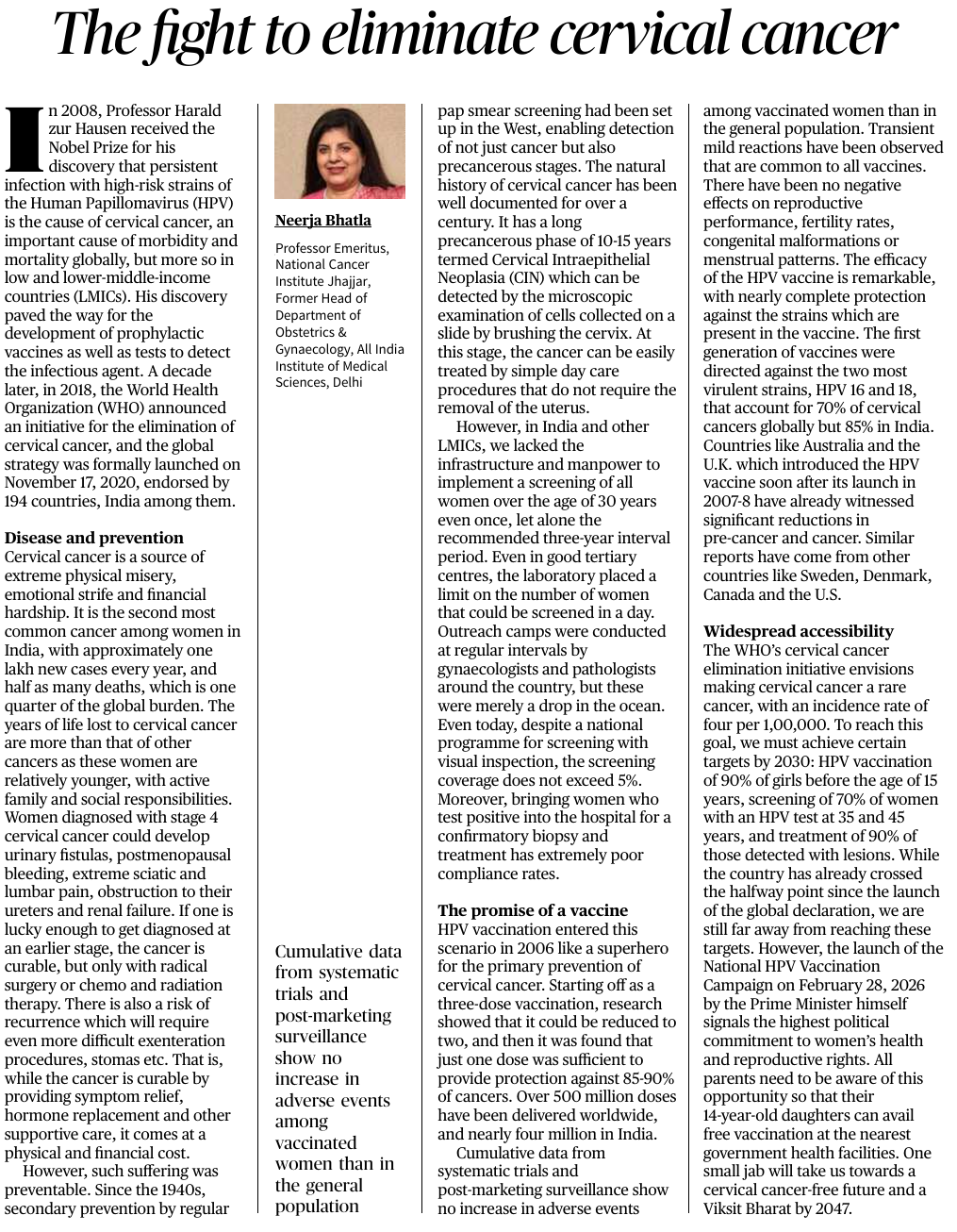 The fight to eliminate cervical cancer
GS Paper II:
Issues relating to development and management of Social Sector/Health
Government policies & interventions (Vaccination, Public Health)
GS Paper III:
Science & Technology in everyday life (Biotechnology – Vaccines)
Context
Cervical cancer remains a major public health challenge, especially in low- and middle-income countries (LMICs) like India.
The WHO’s global strategy (2020) aims to eliminate cervical cancer through:
HPV vaccination
Screening
Treatment
India has recently launched a National HPV Vaccination Campaign (2026) to accelerate progress.
Detailed Analysis
1. Scientific Basis of the Disease
Cervical cancer is primarily caused by persistent infection with high-risk HPV strains (16 & 18).
Long pre-cancerous phase (10–15 years) → provides a window for early detection & prevention.
Screening methods:
Pap smear
Detection of Cervical Intraepithelial Neoplasia (CIN)
👉 Insight: Cervical cancer is highly preventable and treatable if detected early.
2. Disease Burden in India
Second most common cancer among women in India
Around:
1 lakh cases annually
~50,000 deaths
Affects younger women, causing:
Social disruption
Economic hardship
High healthcare costs
👉 Implication: Major gendered public health and socio-economic issue
3. Challenges in India
(a) Weak Screening Infrastructure
Screening coverage <5%
Lack of:
Labs
Skilled manpower
Limited access in rural areas
(b) Poor Follow-up & Treatment Compliance
Women testing positive often do not return for diagnosis/treatment
Weak referral systems
(c) Awareness Deficit
Low awareness about:
HPV infection
Preventive screening
Social stigma around reproductive health
(d) Health System Constraints
Overburdened public health system
Inequity in access across regions
4. Role of HPV Vaccination (Game Changer)
Provides 85–90% protection against cervical cancer
Safe:
No major adverse effects reported
Evolution:
From 3-dose → 2-dose → now even single dose effective
👉 Impact:
Countries like Australia, UK have seen sharp decline in cases
5. WHO Elimination Targets (2030)
90% girls vaccinated (before age 15)
70% women screened (at 35 & 45 years)
90% treatment coverage
👉 Goal: Reduce incidence to <4 per 1,00,000 women
6. India’s Policy Push
Launch of National HPV Vaccination Campaign (2026)
Focus on:
Adolescent girls (≈14 years)
Free vaccination at government facilities
👉 Signals political commitment + public health prioritisation
Why it Matters
Public Health: Prevents a largely avoidable cancer
Women Empowerment: Reduces gender health burden
Economic Gains: Lower healthcare costs & productivity loss
Demographic Dividend: Protects young female population
Way Forward
1. Scale-up Vaccination
Universal coverage through:
Schools
Anganwadi networks
2. Strengthen Screening
Expand low-cost screening methods (VIA, HPV tests)
Mobile health units in rural areas
3. Improve Awareness
Community campaigns
Address stigma via ASHA workers
4. Strengthen Health Systems
Build:
Diagnostic labs
Oncology infrastructure
5. Ensure Continuum of Care
From screening → diagnosis → treatment → follow-up
Conclusion
Cervical cancer elimination is one of the most achievable public health goals due to the availability of effective vaccines and screening tools. However, India’s success will depend on bridging implementation gaps, improving awareness, and ensuring last-mile delivery, transforming a preventable disease into a public health success story by 2047.
UPSC Mains question
Q. The fight against cervical cancer highlights the importance of preventive healthcare in India. Examine in the context of India’s public health system and suggest measures to achieve WHO’s elimination targets.
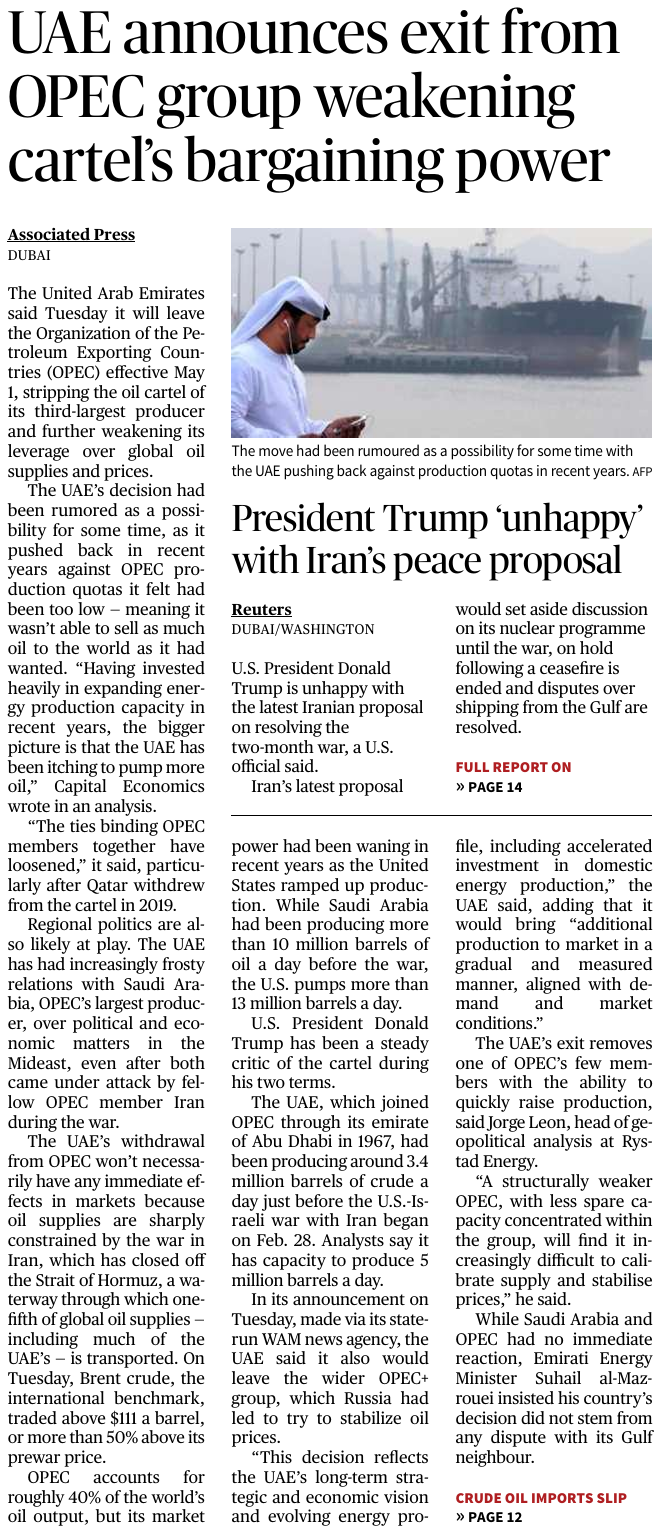
UAE announces exit from OPEC group weakening cartel’s bargaining power
GS Paper II:
International Relations – West Asia
Effect of policies and politics of developed/developing countries
GS Paper III:
Energy Security
Indian Economy – Oil & Gas, External Sector
Context
The UAE announced its exit from OPEC effective May 1, becoming the third country (after Qatar) to leave the cartel.
The move reflects:
UAE’s discontent with production quotas
Shift toward expanding production capacity and energy diversification
This could weaken OPEC’s control over global oil supply and pricing.
Prelims concepts
1. Organization of the Petroleum Exporting Countries (OPEC)
OPEC is a permanent, intergovernmental organization that plays a central role in the global oil market.
Establishment: Created at the Baghdad Conference in 1960 by five founding members: Iran, Iraq, Kuwait, Saudi Arabia, and Venezuela.
OPEC Members: Algeria, Republic of Congo, Equatorial Guinea, Gabon, Iran, Iraq, Kuwait, Libya, Nigeria, Saudi Arabia, United Arab Emirates (exiting May 1, 2026), Venezuela
Headquarters: Vienna, Austria (Note: Austria is not a member of OPEC).
Objective: To coordinate and unify petroleum policies among Member Countries and ensure the stabilization of oil markets.
OPEC+: A larger group that includes the 12 OPEC members and 10 non-OPEC oil-producing nations, most notably Russia, to exert more control over global supply.
Context of Exit: Qatar left in 2019; the UAE’s potential exit (as noted in the article) would signify a major shift as it is the third-largest producer in the group.
2. Economic Concepts: Cartels and Quotas
The article highlights a conflict over "production quotas."
Cartel: An association of manufacturers or suppliers with the purpose of maintaining prices at a high level and restricting competition. OPEC is often cited as a classic example of an international cartel.
Production Quotas: To keep oil prices high, OPEC members agree to limit their output. The UAE's frustration stems from having high spare capacity (the ability to pump more than they currently are) but being restricted by these agreed-upon limits.
Price Benchmarks:
Brent Crude: Sourced from the North Sea; the international benchmark mentioned in the article.
WTI (West Texas Intermediate): The benchmark for US oil.
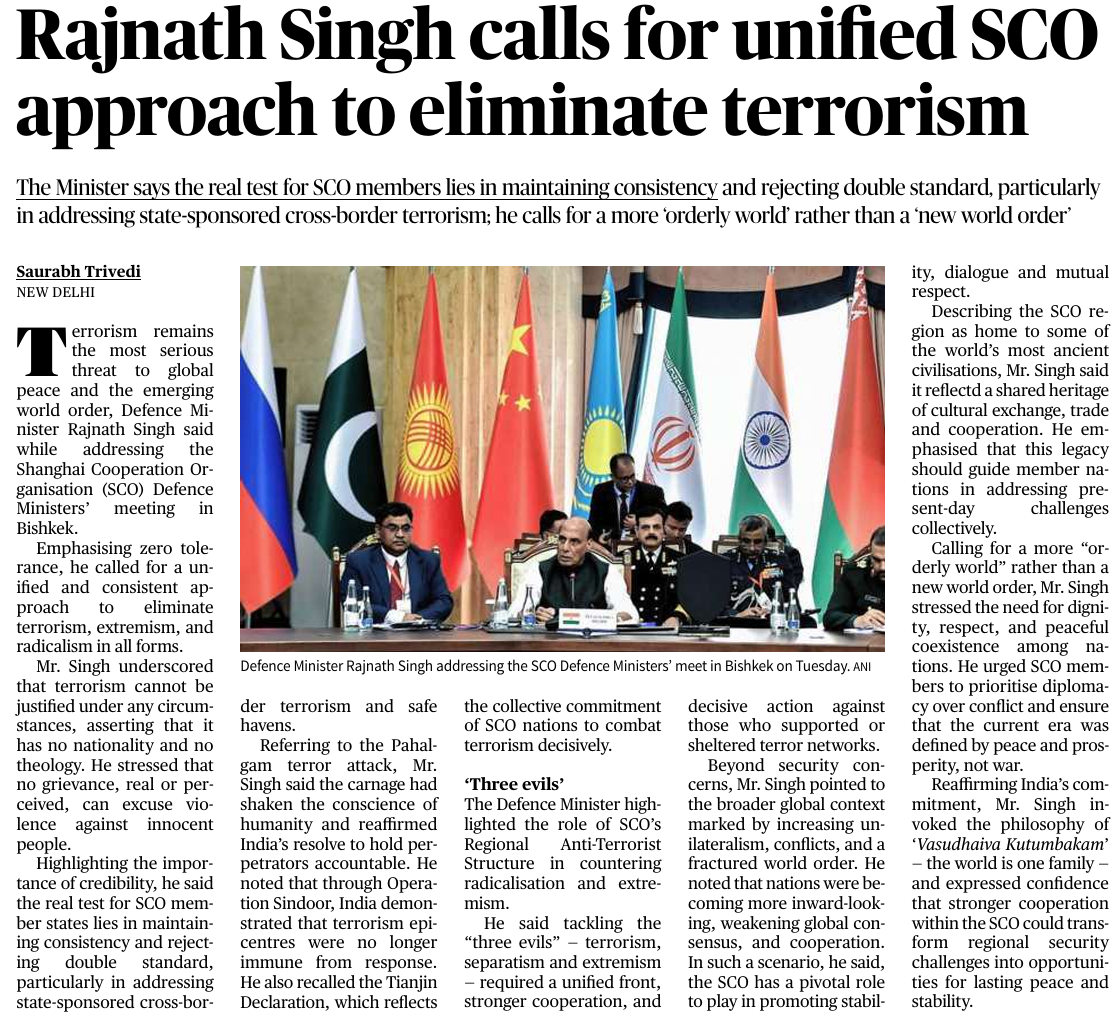
Rajnath Singh calls for unified SCO approach to eliminate terrorism
GS Paper II:
International Relations – Regional groupings (SCO)
Security challenges & terrorism
GS Paper III:
Internal Security – Terrorism, extremism, radicalisation
Context
Defence Minister Rajnath Singh urged
Shanghai Cooperation Organisation (SCO) members to adopt a unified and consistent approach against terrorism.
Emphasis on:
Zero tolerance
Rejecting double standards, especially on state-sponsored cross-border terrorism
Statement made at SCO Defence Ministers’ Meeting (Bishkek).
Prelims concepts
1. Shanghai Cooperation Organisation (SCO)
The SCO is a permanent intergovernmental international organization that serves as a major Eurasian political, economic, and security alliance.
Founded: June 15, 2001, in Shanghai.
Member States (10): China, Russia, Kazakhstan, Kyrgyzstan, Tajikistan, Uzbekistan, India, Pakistan (joined in 2017), Iran (joined in 2023), and Belarus (joined in 2024).
Headquarters: Beijing, China.
Objectives: Strengthening mutual trust; promoting cooperation in politics, trade, and economy; and safeguarding regional peace and security.
The "Shanghai Spirit": Refers to the organization’s core values—mutual trust, mutual benefit, equality, consultation, respect for cultural diversity, and pursuit of common development.
2. Regional Anti-Terrorist Structure (RATS)
Mentioned as a key pillar in the article, RATS is one of the two permanent bodies of the SCO.
Location: Tashkent, Uzbekistan.
Function: It serves to coordinate the efforts of member states against the "Three Evils":
Terrorism
Separatism
Extremism
Annual Exercise: SCO members regularly conduct "Peace Mission" joint military anti-terror exercises under the RATS framework.
3. Key Declarations & Philosophies
The article references specific diplomatic landmarks:
Tianjin Declaration (2025): Adopted at the 25th SCO Summit. It condemned terrorism specifically, including the Pahalgam incident, and called for a multipolar world order while rejecting "double standards" in counter-terrorism.
Vasudhaiva Kutumbakam: A Sanskrit phrase meaning "The World is One Family." India consistently invokes this philosophy in international forums to emphasize inclusive growth and global peace.
"Orderly World" vs. "New World Order": The Minister advocated for an "orderly world" based on established international law and mutual respect, rather than a "new world order" which is often seen as a revisionist term.
UPSC MCQ
Q. Consider the following statements:
The Shanghai Cooperation Organisation (SCO) primarily focuses on promoting regional security, economic cooperation, and combating terrorism among member states.
The SCO includes only countries from South Asia and excludes Central Asian nations.
Which of the statements given above is/are correct?
A. 1 only
B. 2 only
C. Both 1 and 2
D. Neither 1 nor 2
Answer: A. 1 only
Explanation:
Statement 1 – Correct:
SCO is a multilateral organisation aimed at security cooperation, counter-terrorism, and regional development.
Statement 2 – Incorrect:
SCO actually includes several Central Asian countries (Kazakhstan, Kyrgyzstan, Tajikistan, Uzbekistan) along with others like India, China, Pakistan, and Russia.
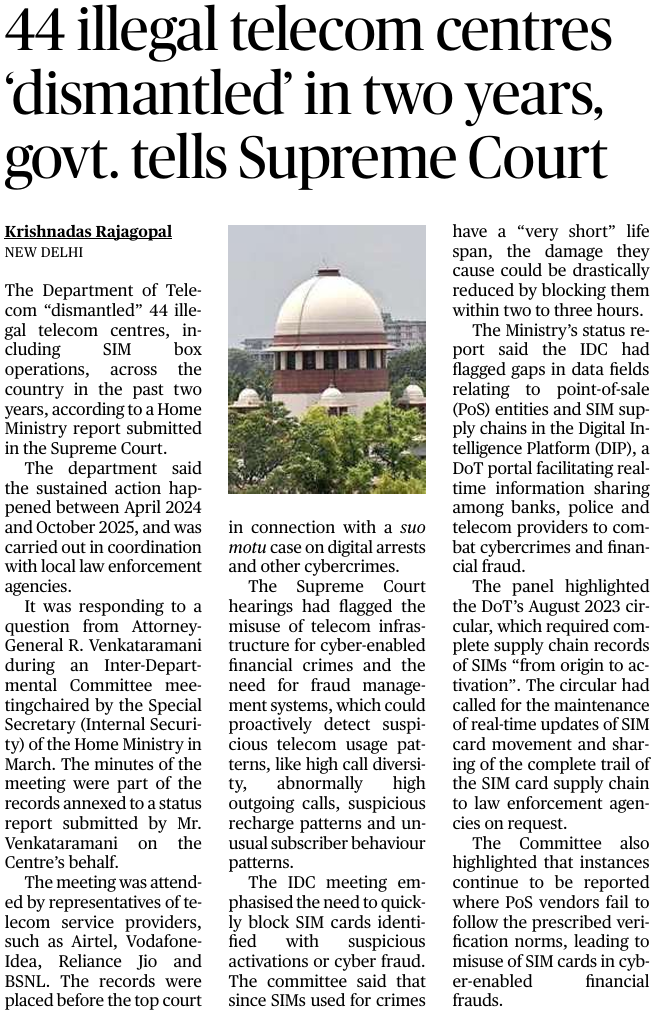 44 illegal telecom centres ‘dismantled’ in two years, govt. tells Supreme Court
GS Paper II:
Governance – Role of government in regulating telecom & digital ecosystem
Issues relating to cyber security & data governance
GS Paper III:
Internal Security – Cybercrime, money laundering, organised crime
Context
The Department of Telecommunications (DoT) informed the Supreme Court that 44 illegal telecom centres (including SIM box operations) were dismantled between April 2024–October 2025.
Action taken in coordination with law enforcement agencies to curb cyber-enabled financial frauds.
Prelims concepts
1. SIM Box Operations (Interconnect Bypass Fraud)
A SIM Box (or GSM Gateway) is a device that can hold hundreds of SIM cards and connect the cellular network directly to an IP network (internet).
How it Works: Fraudsters use SIM boxes to terminate international calls as local calls. A call from abroad is routed via the internet to the SIM box, which then uses a local SIM card to call the Indian recipient.
The Problem:
Revenue Loss: It bypasses the international termination charges that should go to Indian Telecom Service Providers (TSPs).
Security Risk: It masks the caller’s original identity, making it nearly impossible for law enforcement to trace the source of calls used for extortion, "digital arrests," or terror activities.
Action Taken: 44 such centres were dismantled between April 2024 and October 2025.
2. Digital Intelligence Platform (DIP)
Developed by the Department of Telecommunications (DoT), this is a critical backend system for inter-agency coordination.
Objective: To facilitate real-time information sharing and intelligence exchange among stakeholders.
Stakeholders: Banks, Financial Institutions (FIs), Law Enforcement Agencies (LEAs), and Telecom Service Providers (TSPs).
Access: Unlike the Sanchar Saathi portal, the DIP is not accessible to the general public. It serves as a secure, role-based repository for investigators to track fraud patterns.
3. Key Institutional Roles
Department of Telecommunications (DoT): The nodal department under the Ministry of Communications responsible for telecom policy and security.
Inter-Departmental Committee (IDC): Chaired by the Special Secretary (Internal Security), MHA, it ensures coordination between the Home Ministry and Telecom Ministry.
Attorney-General for India: Provided the status report to the Supreme Court. The AG is the Union Government’s chief legal advisor and a Constitutional Authority (Article 76).


 Launch your Graphy