Daily Current Affairs for UPSC 4rd Nov 2025


| Index |
| S.No | Topic | Page No |
| Daily Hindu Analysis (YouTube) |
| 1. | India’s IT dream is at a crossroads |
|
| 2. | Heavy metals found in Cauvery fish; study advises reducing consumption |
|
| 3. | The case for energy efficiency |
|
| 4. | India, Bahrain hold talks on boosting defence, trade ties |
|
| 5. | ₹3,000 crore lost to digital arrest scams, says Supreme Court |
|
| 6. | What are the challenges with the High Seas Treaty? |
|
| Daily Current Affairs (App) |
| 7. | Seven-Month Fishing Ban in Gahirmatha Marine Sanctuary to Protect Olive Ridley Turtles |
|
| 8. | One District One Product (ODOP) |
|
| 9. | Beijing Pushes for World AI Cooperation Organisation |
|
| 10. | National Beekeeping and Honey Mission |
|
| 11. | Nigeria |
|
| 12. | Gogabeel Lake Becomes India’s 94th Ramsar Site |
|
India’s IT dream is at a crossroads GS Paper: 3 (Economy – Growth, Employment, IT & Innovation)
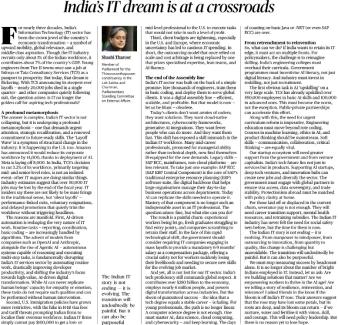
Context - For nearly three decades, India’s Information Technology (IT) sector has been the engine of economic growth, global recognition, and middle-class aspiration.
- However, the sector now faces a profound transformation due to AI-driven automation, global economic slowdown, and changing client demands.
- With major companies like TCS, Amazon, and Meta announcing large-scale layoffs and hiring freezes, India’s IT industry is undergoing a critical transition, not a collapse — but a metamorphosis that demands recalibration.
The IT Industry’s Legacy - India’s IT industry contributed around 7% to India’s GDP and became a symbol of upward mobility.
- Companies like Infosys, Wipro, and TCS gave engineers from Tier-II and Tier-III towns access to global careers.
- The model was built on mass recruitment, cost arbitrage, and outsourcing of technical services to Western firms.
But today: That model is flickering as automation, AI, and changing business models redefine the nature of IT work.
1. The Nature of Transformation 1. Automation and AI Takeover
- Routine IT jobs are being replaced by AI-driven automation, machine learning, and cloud computing.
- Traditional roles like coding or SAP maintenance are being replaced by AI-powered processes.
- Even companies abroad (like Amazon and Meta) are downsizing in response to AI integration.
The “Layoff Wave” — over 20,000 TCS job cuts and 50,000 potential job losses across top Indian IT majors — marks a shift, not a shutdown.
2. Decline of the Traditional Outsourcing Model
- The “Assembly Line” model that once drove Indian IT — hiring thousands of engineers, training them in basic coding, and deploying them cheaply — is now obsolete.
- Global clients today demand cloud-native architectures, cybersecurity, and AI-based integrations, not low-cost maintenance services.
- The demand now is for innovation and problem-solving, not routine execution.
3. Skills Mismatch and Mid-Career Crisis - Many Indian professionals are technically strong but strategically underprepared for new-age technologies.
- Skills like SAP ERP, once essential, are now being automated.
- As a result, mid-level employees face stagnation while fresh graduates lack practical exposure to newer tools like AI, data science, or cybersecurity.
The challenge: India’s workforce is caught between an aging skill set and rapidly evolving global requirements.
Why This Shift Matters
1. Economic Implications: o IT exports (nearly $250 billion) drive India’s current account balance and forex reserves. o A slowdown impacts employment and state-level economies like Karnataka, Telangana, and Tamil Nadu.
2. Social Implications: o The IT sector created the urban middle class and aspirational “India Story.” o Layoffs and automation threaten this socio-economic mobility.
3. Geopolitical Dimension: o With India branding itself as the Digital Hub of the Global South, maintaining IT leadership is crucial for global partnerships and technology diplomacy.
The Way Forward
1. Skilling and Reskilling
- India must shift from “mass recruitment” to mass reskilling.
- Government and private collaboration should focus on AI, quantum computing, data analytics, cybersecurity, and product innovation.
- Education curricula must align with future-ready skills rather than legacy programming.
2. Policy Reorientation - The government’s National Skill Mission and Digital India 2.0 need sharper industry alignment.
- Introduce fiscal incentives for tech upskilling, and tax breaks for R&D in emerging technologies.
- Encourage public-private partnerships (PPPs) to bridge the skill gap in Tier-II and Tier-III cities.
3. Rethinking the Business Model - Move from outsourcing-based to innovation-driven IT services.
- Invest in product-based companies, startups, and AI-powered platforms rather than pure service delivery.
- Build strong linkages between academia, industry, and government labs for applied innovation.
4. Retaining Global Competitiveness - Indian firms must evolve from cost-based outsourcing to expertise-based consulting.
- Cultivate language fluency, cultural understanding, and domain specialization to retain Western clients.
UPSC Mains Q. The Indian IT sector, once the engine of economic growth and employment, now faces structural transformation driven by automation and AI. Discuss the challenges and opportunities this shift presents for India’s digital economy.
Heavy metals found in Cauvery fish; study advises reducing consumption
GS Paper: 3 (Environment – Pollution & Conservation; Science and Technology – Public Health) Context
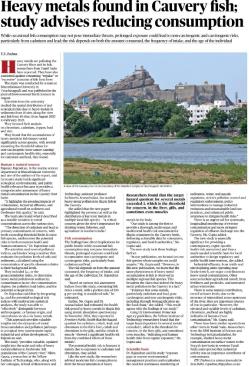
- A recent study by Bharathidasan University, Tiruchirappalli, has found dangerous levels of heavy metals — including cadmium, lead, chromium, copper, and zinc — in fish species from the Cauvery River.
- The research warns that regular or excessive fish consumption from the river can pose non-carcinogenic and carcinogenic health risks, especially due to cadmium and lead accumulation.
- It highlights the growing concern of industrial effluents, urbanisation, and agricultural runoff polluting river systems in India.
What is the Issue About? - The study analysed sediments and fish samples from 18 sites along the Cauvery River (Aug 2023–Feb 2024).
- Findings revealed that several fish species had metal concentrations exceeding safety thresholds, especially in liver, gills, and muscles.
- Researchers observed that the Target Hazard Quotient (THQ) — a measure of health risk — exceeded 1, signalling potential harm to consumers.
While occasional fish consumption may not be immediately dangerous, chronic exposure over time can lead to bioaccumulation, biomagnification, and serious health risks, including neurological and carcinogenic effects.
Key Ecological Concepts
1. Bioaccumulation
- It refers to the gradual build-up of toxic substances (like heavy metals) in the tissues of an organism over time.
- These substances enter through food, water, or air and are stored faster than they can be metabolised or excreted.
- In the Cauvery case, fish accumulate metals from contaminated sediments and water.
2. Biomagnification - It is the increase in concentration of toxic substances as they move up the food chain.
- Small aquatic organisms absorb metals → fish eat them → humans eat the fish → concentration increases at each level.
- This explains why humans at the top of the food chain face the highest health risks.
Health and Environmental Impact | Heavy Metal | Source | Major Health Effect |
| Cadmium (Cd) | Industrial discharge, phosphate fertilisers | Kidney damage, bone fragility, cancer |
| Lead (Pb) | Paint, battery waste, smelting, effluents | Neurotoxicity, developmental delays in children |
| Chromium (Cr) | Tanneries, dye industries | Liver/kidney damage, carcinogenic |
| Copper (Cu), Zinc (Zn) | Metal processing, waste discharge | At high doses – gastrointestinal, liver effects |
Connection to Minamata Disease & Convention Minamata Disease - A neurological disorder caused by mercury poisoning, first identified in Minamata Bay, Japan (1956).
- Resulted from biomagnification of mercury in seafood, leading to severe birth defects, paralysis, and death.
- It became a symbol of industrial pollution’s impact on human health.
Minamata Convention on Mercury (2013) - A global treaty adopted by the UN to protect human health and the environment from mercury emissions.
- India ratified it in 2018.
- It mandates countries to control mercury release, regulate industrial discharge, and promote safer alternatives.
- The current Cauvery case underscores why such international frameworks are vital for national river management.
Way Forward 1. Regular monitoring of riverine sediments and fish. 2. Stricter regulation of industrial and agricultural effluent discharge. 3. Enhanced public awareness on safe fish consumption. 4. Policy interventions to prevent metal pollution and unsustainable land-use practices.
- The study provides actionable data for health regulators and local authorities to mitigate pollution risks in the Cauvery basin and other major rivers of Southern India.
UPSC Mains Q. Bioaccumulation and biomagnification are critical concerns in aquatic ecosystems. Examine how heavy metal contamination poses environmental and public health challenges in India. Discuss measures needed to mitigate such risks.
The case for energy efficiency 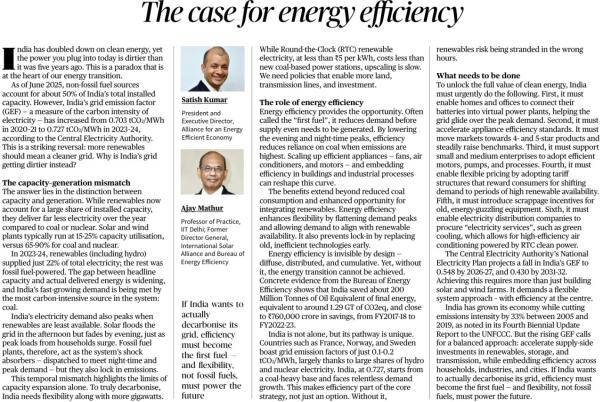
GS Paper: 3 (Environment, Energy, Infrastructure, and Growth) Context
- India has made significant progress in expanding clean energy, with nearly 50% of installed capacity now coming from non-fossil fuel sources.
- However, paradoxically, India’s carbon intensity of electricity generation (measured as the Grid Emission Factor, GEF) has increased — from 0.703 tCO₂/MWh in 2020–21 to 0.727 tCO₂/MWh in 2023–24.
- This means that even though we have more renewable energy installed, the electricity we consume is getting dirtier, not cleaner.
- The article explores why this is happening and how energy efficiency — called the “first fuel” — can be the key to genuine decarbonisation.
What is Grid Emission Factor (GEF)? - It represents the amount of CO₂ emitted per unit of electricity generated.
- A higher GEF = dirtier electricity.
- Despite higher renewable capacity, India’s GEF has increased — a counterintuitive trend.
1. The Capacity–Generation Mismatch - India’s renewable capacity has grown rapidly, but actual generation lags behind due to low utilisation.
- Solar and wind plants have a capacity utilisation of 15–25%, compared to 65–90% for coal and nuclear.
- As a result, though renewables make up ~50% of capacity, they supplied only 22% of total electricity in 2023–24 — the rest came mainly from coal.
Key Point:
India’s growing electricity demand is still met by coal, which is the most carbon-intensive source.
2. Demand–Supply Timing Mismatch - Solar power peaks during the day but fades by evening, while India’s power demand peaks at night.
- To meet night-time demand, coal plants act as shock absorbers, ramping up generation.
- These plants emit more CO₂, negating the gains from renewables.
Result:
More renewables ≠ less emissions, unless demand patterns and storage systems are aligned.
3. Cost Competitiveness vs Implementation Bottlenecks - Round-the-Clock (RTC) renewable power — combining solar, wind, and battery storage — is already cheaper than new coal power (< ₹5/kWh).
- But scaling up requires:
- More land availability,
- Better transmission infrastructure, and
- Higher investment flow.
Without these, clean energy growth remains constrained.
4. The Role of Energy Efficiency (“The First Fuel”)
- Energy Efficiency (EE) means using less energy to achieve the same output, thereby reducing total demand.
- It is called the “first fuel” because it’s cheaper and faster than generating new energy.
Benefits: 1. Cuts demand peaks (especially evening peaks), reducing reliance on coal. 2. Lowers total emissions while improving energy security. 3. Prevents “lock-in” of inefficient technologies (e.g., outdated ACs, motors). 4. Improves flexibility, allowing renewable supply to match demand.
Example:
Scaling up energy-efficient fans, ACs, and industrial motors could drastically reduce coal consumption during peak hours.
5. Global Comparison
- France, Norway, and Sweden have achieved very low emission factors (0.1–0.2 tCO₂/MWh), mainly due to their hydro and nuclear dominance.
- India, with a coal-heavy base and rising energy demand, faces a steeper challenge but can make major progress through efficiency-led decarbonisation.
What Needs to Be Done (Policy Measures) | Step | Description |
| 1. Virtual Power Plants (VPPs) | Allow homes and offices to connect their batteries to the grid to supply power during peak hours. |
| 2. Appliance Efficiency Standards | Enforce 4- and 5-star products (BEE labels) and phase out inefficient ones. |
| 3. Support MSMEs | Help small industries adopt efficient motors, pumps, and processes. |
| 4. Flexible Pricing | Offer lower tariffs during high renewable availability to encourage smart consumption. |
| 5. Scrap Old Equipment | Introduce incentives to replace energy-guzzling appliances. |
| 6. Green Cooling & Electricity Services | Allow utilities to procure efficient air-conditioning powered by RTC renewables. |
UPSC Mains Q. Even though India is rapidly increasing its renewable energy capacity, its electricity grid is becoming dirtier. Discuss the reasons behind this paradox and suggest how energy efficiency can help solve it.
India, Bahrain hold talks on boosting defence, trade ties
GS Paper: 2 (International Relations – India and its Neighbourhood; Bilateral Relations)
Context
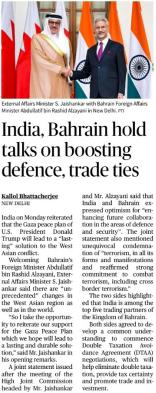
- India and Bahrain recently held a High Joint Commission Meeting in New Delhi, co-chaired by External Affairs Minister S. Jaishankar and Bahraini Foreign Minister Abdullatif bin Rashid Alzayani.
- Both nations discussed ways to enhance cooperation in defence, trade, and security, while reaffirming a shared commitment to combat terrorism and ensure regional stability.
- The meeting also covered the Gaza Peace Plan and emphasized the importance of a lasting solution to the West Asian conflict.
Key Outcomes 1. Defence and Security Cooperation - Both countries agreed to expand cooperation in defence training, information sharing, and maritime domain awareness.
- They expressed optimism about “enhancing future collaboration in defence and security,” especially given their shared interest in maintaining stability in the Arabian Gulf region.
2. Counter-Terrorism Commitment - The joint statement condemned terrorism in all forms, including cross-border terrorism, aligning with India’s consistent stance in international fora.
- Both reaffirmed their determination to combat organized terror networks and prevent misuse of digital and financial systems for terror financing.
3. Trade and Economic Relations - India is among the top five trading partners of Bahrain.
- The two sides discussed enhancing trade in petroleum products, gems and jewellery, IT, fintech, and healthcare.
- Agreement to update and modernize the Double Taxation Avoidance Agreement (DTAA) will:
- Prevent double taxation,
- Encourage investment certainty,
- Facilitate cross-border trade.
4. Regional and Global Context - India reiterated support for the Gaza Peace Plan, expressing hope that it would lead to a “lasting and durable solution” to the West Asian conflict.
- The discussions highlighted India’s growing engagement with West Asia (Middle East) — part of India’s broader “Link West Policy.”
UPSC Prelims Q. With reference to Bahrain, consider the following statements: 1. It is an island nation located in the Persian Gulf, connected to Saudi Arabia by a causeway. 2. It shares a land border with Qatar. 3. It is one of the founding members of the Gulf Cooperation Council (GCC). Which of the statements given above is/are correct?
(a) 1 and 3 only
(b) 2 and 3 only
(c) 1 only
(d) 1, 2 and 3
Answer: a
₹3,000 crore lost to digital arrest scams, says Supreme Court
GS Paper: 3 (Internal Security – Cyber Security & Cybercrimes) Context
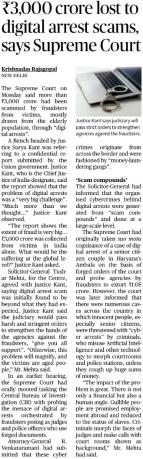
- The Supreme Court of India has revealed that over ₹3,000 crore has been scammed from Indian citizens — especially senior citizens — through digital arrest scams.
- These scams involve criminals posing as police officers or government authorities, using AI-based voice/video morphing and digital courtrooms to extort money.
- The Court observed that these frauds are part of international money-laundering networks, calling it a “very big challenge” and urging stricter actions by law enforcement agencies.
What is a Digital Arrest? A digital arrest is a cyber fraud technique where scammers: - Impersonate law enforcement officials (CBI, police, NCB, etc.),
- Claim the victim is accused in a case (money laundering, drugs, or cybercrime),
- Use video calls or fake digital courtrooms to “virtually arrest” the victim,
- Then demand money to “settle” the case or “avoid arrest.”
1. Scale of the Problem: o ₹3,000 crore scammed from Indian victims, mostly elderly citizens. o Losses indicate much larger global operations run by international cybercrime syndicates.
2. Nature of Scams: o Operated from foreign locations, using AI, spoofed numbers, and forged documents. o Originates from “scam compounds” — organized hubs generating large-scale cyber frauds.
3. Supreme Court’s Response: o Strong warning: Judiciary will issue strict orders to empower investigating agencies. o Stressed on human cost — victims lose money and dignity; some are exploited abroad. o Suggested involving CBI and other central agencies for deeper probes. Understanding Cybercrime Definition: Any criminal activity that uses computers, digital devices, or networks to commit or facilitate unlawful acts.
Three Major Types of Cybercrimes:
| Type | Description | Example |
| 1. Cyber Terrorism | Using cyberspace to attack critical infrastructure, create panic, or threaten national security. | Hacking power grids, ransomware on hospitals or government systems. |
| 2. Cyber Warfare | State-sponsored attacks targeting another country’s systems for espionage or disruption. | Chinese or Russian cyber operations on rival nations’ defense databases. |
| 3. Cybercrime (Conventional) | Digital frauds targeting individuals for financial or data theft. | Phishing, OTP scams, digital arrest frauds, fake KYC calls. |
Cyber Protection Ecosystem in India | Institution / Mechanism | Function / Objective |
| Indian Cyber Crime Coordination Centre (I4C) | Nodal agency under MHA (2018) coordinating cybercrime response and investigation across states. |
| National Cyber Crime Reporting Portal | (www.cybercrime.gov.in) – Citizens can report online frauds or harassment. |
| CERT-In (Indian Computer Emergency Response Team) | Under MeitY; responds to cyber threats and issues alerts on phishing and malware. |
| Cyber Swachhta Kendra (Botnet Cleaning and Malware Analysis Centre) | Helps users clean infected systems and promotes cyber hygiene. |
| National Critical Information Infrastructure Protection Centre (NCIIPC) | Protects critical sectors like power, banking, telecom, transport from cyber attacks. |
| National Cyber Security Policy, 2013 (Updated Draft 2024) | Aims to build secure cyberspace through capacity building and global collaboration. |
| Information Technology (IT) Act, 2000 (Amended 2008) | Main law governing cyber offences; Sections 66C, 66D, 67 deal with identity theft, cheating by impersonation, and data misuse. |
Why It Matters - Elderly citizens and digitally unaware users are most vulnerable.
- Growing use of AI and deepfakes is making detection difficult.
- India needs stronger international cooperation, public awareness, and cyber forensics capacity to combat this new wave of organized digital crime.
UPSC Prelims Q. With reference to
Digital Arrest Scams recently seen in the news, consider the following statements: 1. They involve impersonation of law enforcement agencies through digital means to extort money. 2. The Indian Computer Emergency Response Team (CERT-In) is the nodal agency to coordinate cybercrime investigation. 3. The Cyber Swachhta Kendra assists in cleaning and securing infected systems. Which of the statements given above is/are correct?
(a) 1 and 2 only
(b) 1 and 3 only
(c) 2 and 3 only
(d) 1, 2 and 3
Answer: b
What are the challenges with the High Seas Treaty?
GS2-International Relations; GS-3- Environment &Biodiversity Context
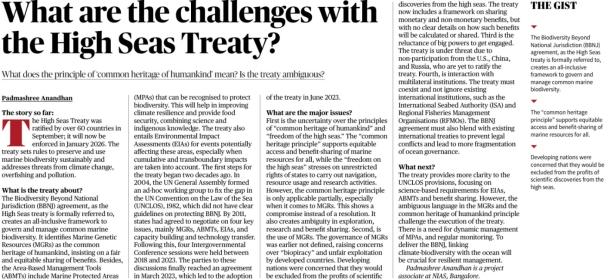
- The High Seas Treaty, also called the Biodiversity Beyond National Jurisdiction (BBNJ) Agreement, has been ratified by over 60 countries and will come into force in January 2026.
- It aims to preserve marine biodiversity, ensure sustainable use of ocean resources, and address climate change, overfishing, and pollution in areas beyond national control.
- Despite being a landmark step, the treaty faces ambiguities and challenges in implementation, especially regarding the sharing of marine resources and global cooperation.
What are the High Seas? — Understanding Ocean Jurisdictions What is the High Seas Treaty (BBNJ Agreement)? - It is a legally binding international framework under the United Nations Convention on the Law of the Sea (UNCLOS, 1982).
- Objective: To ensure sustainable management and equitable sharing of marine biodiversity beyond national jurisdictions.
Key Provisions 1. Marine Genetic Resources (MGRs):
Treats genetic materials (like DNA, enzymes, microorganisms from ocean species) as the “common heritage of humankind” — benefits to be shared fairly among all nations.
2. Area-Based Management Tools (ABMTs):
Includes creating Marine Protected Areas (MPAs) to conserve biodiversity.
3. Environmental Impact Assessments (EIAs):
Mandatory for activities affecting ocean ecosystems.
4. Capacity Building and Technology Transfer:
Helping developing countries access marine technologies and research.
Analysis — Major Issues with the Treaty
1. Ambiguity between Two Key Principles
- The treaty attempts to balance:
- Common Heritage of Humankind: Promotes equitable access and benefit-sharing of marine resources for all.
- Freedom of the High Seas: Allows unrestricted rights of navigation, fishing, and research for all nations.
- The conflict between these creates uncertainty — how can open access coexist with shared ownership?
- Result → Ambiguity in regulating exploration, resource use, and benefit-sharing.
2. Unclear Governance of Marine Genetic Resources (MGRs) - Governance structure for MGRs is not clearly defined.
- Raises concern over “biopiracy” — developed countries exploiting marine resources without fair sharing.
- Developing nations fear being excluded from profits of scientific discoveries (e.g., pharmaceuticals, enzymes derived from deep-sea species).
3. Reluctance of Major Powers - The U.S., China, and Russia — key global maritime powers — haven’t ratified the treaty yet.
- Their absence threatens the global legitimacy and enforcement of the agreement.
4. Coordination with Existing Institutions - The treaty must operate alongside existing bodies such as:
- International Seabed Authority (ISA)
- Regional Fisheries Management Organisations (RFMOs)
- Poor coordination could lead to legal overlaps and fragmentation of ocean governance.
5. Vague Benefit-Sharing Mechanisms
- Although the treaty mentions sharing monetary and non-monetary benefits (like data, research, and technology),
it lacks clarity on how these will be calculated, shared, or enforced. - Without clear rules, developing nations may again be marginalized.
What Next? — The Way Forward - The treaty clarifies several UNCLOS gaps by focusing on:
- Science-based Environmental Impact Assessments (EIAs)
- Management of Marine Protected Areas (MPAs)
- Benefit-sharing frameworks
- But ambiguous language around MGRs and the heritage principle could weaken its execution.
Future action must focus on: · Dynamic monitoring and adaptive management of MPAs. · Stronger cooperation between new and existing ocean institutions. · Ensuring equitable participation of developing nations. · Climate–biodiversity linkages — aligning ocean conservation with climate resilience
goals.
UPSC Prelims Q. With reference to the
High Seas Treaty (BBNJ Agreement), consider the following statements: 1. It operates under the framework of the United Nations Convention on the Law of the Sea (UNCLOS). 2. It aims to conserve and ensure equitable use of marine biodiversity in areas beyond national jurisdictions. 3. It has been ratified by all permanent members of the UN Security Council. Which of the statements given above is/are correct?
(a) 1 only
(b) 1 and 2 only
(c) 2 and 3 only
(d) 1, 2 and 3
Answer: b
Seven-Month Fishing Ban in Gahirmatha Marine Sanctuary to Protect Olive Ridley Turtles
Syllabus: GS Paper 3 – Environment and Biodiversity Conservation
Context:
A
seven-month fishing ban from
November 1 to May 31 has been enforced in
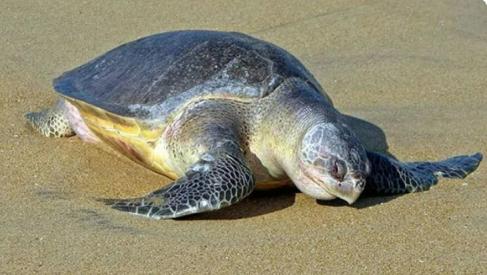
Gahirmatha Marine Sanctuary, Odisha, to protect
endangered Olive Ridley sea turtles during their annual
mating and nesting season.
Key Points: - Location: Gahirmatha Marine Sanctuary, Kendrapada district, Odisha, part of India’s richest marine biodiversity zones.
- Duration of Ban: November 1 to May 31, covering the turtle breeding and nesting period.
- Conservation Measures:
- Establishment of 14 turtle protection camps, including four offshore camps at Madali, Sasanipada, Ekakula, and Babubali islands.
- Deployment of four patrolling boats to prevent illegal fishing.
- Enforcement: Marine police units from Jamboo, Talachua, and Tantiapala, along with the Coast Guard (Paradip), will assist forest personnel.
- Fishing Restrictions: Marine fishing banned within 20 km of the sanctuary’s 1,435 sq km coastline from Hukitola to Dhamra.
Olive Ridley Turtles – Key Facts: - About: Smallest and most abundant sea turtles; named after their olive-coloured shell.
- Nesting Behaviour: Known for Arribada, where thousands nest simultaneously on the same beach.
- Habitat: Found in warm waters of the Pacific, Atlantic, and Indian Oceans.
- Major Rookery: Gahirmatha Sanctuary is the world’s largest rookery of Olive Ridleys.
- Protection Status:
- Wildlife Protection Act, 1972: Schedule I
- IUCN Red List: Vulnerable
- CITES: Appendix I
- Major Threats:
- Poaching for meat, shell, and eggs.
- Marine pollution from plastics and discarded nets.
- Fishing trawlers operating illegally near nesting zones, leading to turtle deaths.
Source: The Hindu
One District One Product (ODOP)
Syllabus: GS Paper 3 – Economy and Government Schemes Context:
The
Indian Railways will support the newly launched
‘Aabhar’ online store, which will feature exclusive gift items produced under the
One District One Product (ODOP) initiative to promote local talent and craftsmanship.
Key Points: - Nodal Ministry: Launched by the Ministry of Food Processing Industries in 2018.
- Objective: To enable districts to realise their full potential, boost economic and socio-cultural growth, and generate employment, particularly in rural areas.
- Export Promotion: Implemented alongside the ‘Districts as Export Hubs’ initiative by the DGFT, Department of Commerce, to make every district an export hub.
- Alignment with Atmanirbhar Bharat: Supports local manufacturing, enhances business competitiveness, and promotes self-reliance through global market access.
- Selection Process: Products are chosen by States/UTs considering the existing local ecosystem, District Export Hub products, and GI-tagged items.
Source: The Hindu
Beijing Pushes for World AI Cooperation Organisation
Syllabus: GS Paper 2 – International Relations and Technology Governance Context:
At the
APEC Summit in Gyeongju, South Korea,
Chinese President Xi Jinping proposed the creation of a
global organisation to regulate and coordinate AI development, reflecting China’s push to shape international norms in artificial intelligence.
Key Points: - Proposal: Xi Jinping announced plans for a “World Artificial Intelligence Cooperation Organization.”
- Purpose: To develop global governance rules, promote responsible innovation, and ensure AI serves as a public good.
- Headquarters: Likely to be located in Shanghai, a leading global technology hub.
- Strategic Aim: China seeks to establish leadership in global AI governance, offering an alternative to US-led regulatory approaches.
- Significance: Marks China’s first formal proposal for international AI regulation.
- Domestic Context: Reflects confidence in Chinese AI firms like DeepSeek, which are developing cost-effective models competing with US counterparts.
- Broader Vision: Supports China’s goal of achieving “algorithmic sovereignty” and reducing dependence on Western technologies.
Source: Indian Express
National Beekeeping and Honey Mission
Syllabus: GS Paper 3 – Agriculture and Allied Sectors Context:
The Government of India launched the
National Beekeeping & Honey Mission (NBHM) in 2021 to promote scientific beekeeping and drive the “
Sweet Revolution”, aimed at enhancing income and employment in the beekeeping sector.
Key Points: - Scheme Type: Central Sector Scheme implemented through the National Bee Board (NBB).
- Funding: ₹500 crore for three years (2020–21 to 2022–23), extended up to 2025–26.
- Objective: Promote holistic growth of the beekeeping industry for income and employment generation.
- Implementation Structure: Three Mini Missions (MMs) to ensure targeted development.
- Mini Mission-I: Focus on crop production and productivity through pollination and scientific beekeeping.
- Mini Mission-II: Focus on post-harvest management, processing, storage, marketing, and value addition of beehive products.
- Mini Mission-III: Focus on research and technology development suited to regional and socio-economic conditions.
- Infrastructure Development: Establish facilities for quality bee stock breeding, post-harvest management, and marketing.
- Quality Control: Set up state-of-the-art honey testing labs at regional and district levels.
- Traceability: Develop blockchain-based systems for honey source tracking and promote online registration of beekeepers.
- Skill Development: Provide training and dissemination of technologies to enhance productivity and quality.
- Institutional Support: Strengthen beekeepers through SHGs, FPOs, and cooperatives.
Source: PIB
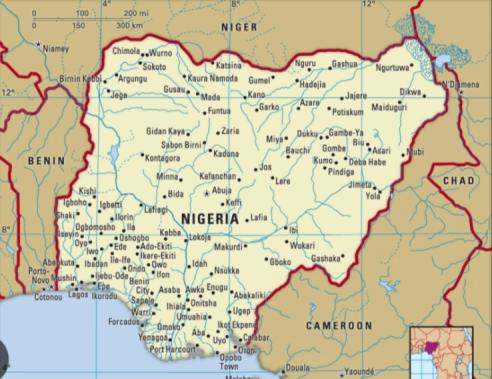
Nigeria
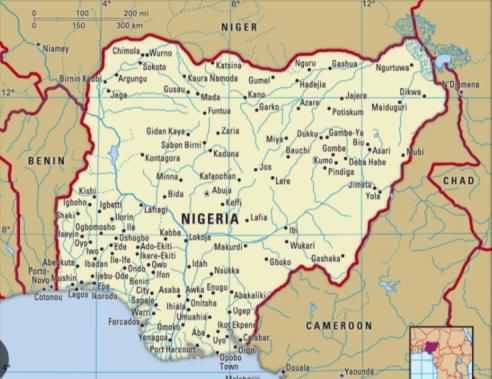
Syllabus: GS Paper 2 – International Relations Context:
The
US President has directed the Department of War to prepare for possible
military action in Nigeria, drawing global attention to the region’s strategic and geopolitical importance.
Key Points: - Location: Situated on the western coast of Africa, known as the “Giant of Africa.”
- Boundaries: Bordered by Niger (north), Chad and Cameroon (east), Benin (west), and the Gulf of Guinea (south).
- Population: Africa’s most populous country.
- Capital: Abuja.
- Drainage: Major drainage basins include the Niger-Benue basin, Lake Chad basin, and Gulf of Guinea basin.
- Rivers: Niger River and its main tributary Benue River are the principal waterways.
- Major Mountain Range: Cameroonian Highlands.
- Natural Resources: Rich in petroleum and natural gas deposits, contributing significantly to its economy.
Source: Indian Express
Gogabeel Lake Becomes India’s 94th Ramsar Site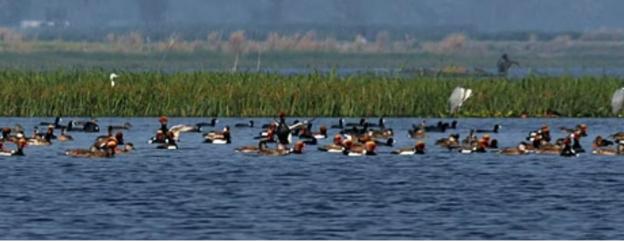
Syllabus: GS Paper 3 – Environment and Conservation Context:
India has added Bihar’s Gogabeel Lake as its 94th Ramsar site, marking another step in the country’s commitment to wetland conservation under the Ramsar Convention. The oxbow lake, located in Katihar district, is Bihar’s first community reserve, managed by local communities.
Key Points:
- Location: Situated between the Ganga and Mahananda rivers in Katihar district, Bihar.
- Type: An oxbow lake and floodplain wetland supporting rich biodiversity.
- Ecological Role: Provides habitat for migratory birds, aquatic flora, and fauna during monsoon when it connects with the nearby rivers.
- Community Management: Functions as a community-managed wetland, emphasizing local participation in conservation.
- Bihar’s Ramsar Sites: Gogabeel is the sixth Ramsar site in Bihar, joining Gokul Jalashay and Udaipur Jheel among others.
- National Significance: India now has 94 Ramsar sites, covering over 13.6 lakh hectares, reflecting its progress in wetland protection.
- Global Ranking: India ranks third globally in the number of Ramsar sites, after the United Kingdom (176) and Mexico (144).
- Government Initiative: Environment Minister Bhupender Yadav highlighted India’s focus on sustainable wetland management through community participation and ecological restoration.
Source: The Hindu

 Launch your Graphy